Are genital warts dangerous?
Most typical genital warts are caused by low-risk HPV types and are not cancer. Unusual, bleeding or persistent growths should still be examined.
Genital warts are small skin growths caused by certain types of HPV. They may be soft, flat or rough. Many are harmless, but not every bump is a wart.
Dr Neeraj Garg · MBBS (IMS-BHU), MD (IMS-BHU) · Dermatologist & STD / STI Specialist, Dehradun
Request an Appointment ↗For privacy, send only a simple appointment request through WhatsApp. Medical details can be discussed during consultation.
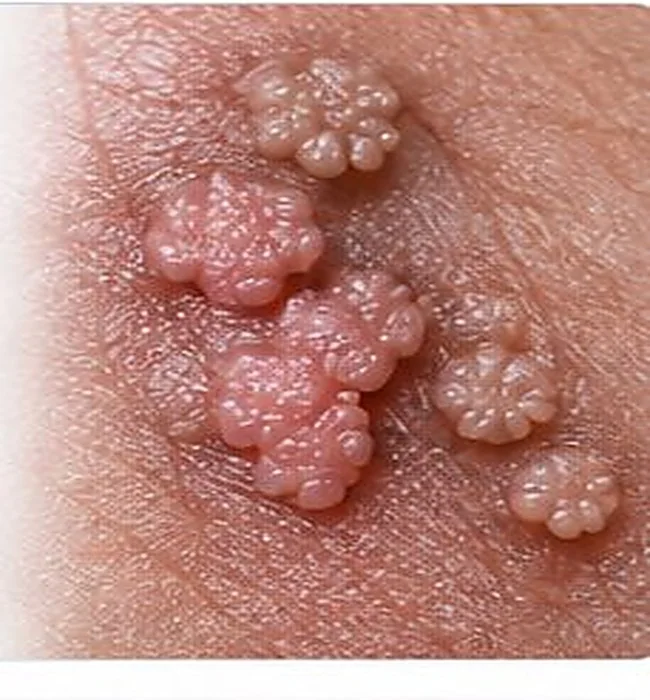
Educational illustration, not an actual clinical photograph. Signs vary and a diagnosis requires assessment.
Treatment depends on the number, size and location of the bumps. Removing a visible wart does not guarantee that HPV has completely cleared, and recurrence is possible.
Most typical genital warts are caused by low-risk HPV types and are not cancer. Unusual, bleeding or persistent growths should still be examined.
Usually, a dermatologist can identify typical warts by examination. A biopsy is considered if a growth looks unusual; an HPV DNA test is not generally needed for visible external warts.
Treatment may involve carefully selected creams, freezing or removal such as RFA. Warts can return after any method because treatment removes visible growths rather than guaranteeing the virus has cleared.
Not every growth on intimate skin is a genital wart. Skin tags and molluscum can look similar, so an examination may be helpful.
People commonly book an appointment for:
Assessment helps identify the likely cause, choose useful tests and explain treatment and follow-up without unnecessary medication.
Usually clinical examination; biopsy for atypical or persistent lesions. HPV typing is not routinely needed to diagnose external warts.
Typical external genital warts are usually diagnosed by examination rather than blood tests or HPV DNA testing. Unusual, bleeding, darkly pigmented or nonhealing growths may need a biopsy.
Common concerns explained in plain language. A test result or photograph alone may not tell the whole story.
A raised bump on the penis, vulva, groin or around the anus is not necessarily a genital wart. Skin tags, molluscum contagiosum and other harmless or medically important conditions can resemble HPV warts. A dermatologist can assess the shape, surface and location before recommending removal or further examination.
Some visible genital warts can be treated with a clinician-selected procedure such as radiofrequency removal; other cases may be better suited to topical treatment or a different method. Choice depends on the number, size and location of lesions. No technique guarantees that HPV or visible warts will never recur.
The diagnosis of a typical external wart usually relies on examination, not a blood HPV test. Whether screening for HIV, syphilis, gonorrhoea or chlamydia is appropriate depends on symptoms, exposure history and other risk factors. Your clinician can explain which tests are relevant instead of automatically ordering every available test.
Most visible anogenital warts are caused by HPV types 6 and 11, which are considered low-oncogenic-risk types. High-risk HPV types, especially 16 and 18, are associated with precancer and cancer, but usually do not cause typical visible warts. Having genital warts does not itself mean that a person has cancer. However, an unusual, pigmented, bleeding, ulcerated or persistent growth should be examined rather than assumed to be a benign wart.
Cryotherapy, prescribed topical treatments and radiofrequency removal treat visible lesions; they do not reliably eradicate all HPV infection in surrounding tissue. Warts may recur, especially during the first months after treatment, and recurrence does not automatically mean that treatment was performed incorrectly or that a partner was recently unfaithful.
HPV may remain undetected for months or years. Warts can become noticeable long after acquisition, so the appearance of a wart in a monogamous relationship does not establish when infection occurred or prove recent sexual contact outside the relationship. Partners may share HPV even when only one has visible warts.
Recurrence is possible after cryotherapy, radiofrequency/electrosurgical removal, prescribed topical treatment or other methods. No treatment guarantees permanent clearance because treating visible warts does not necessarily eliminate HPV in surrounding skin. Recurrence is particularly common during the first three months after treatment. The chance of recurrence varies with wart burden, location, immune status and treatment; reliable head-to-head recurrence percentages are not available for every method. A new wart should be reassessed rather than automatically treated with the same procedure.
Visible warts can be treated with selected topical therapies, cryotherapy or careful destructive procedures such as RFA. Recurrence is possible; HPV vaccination prevents many future infections but does not treat existing warts.
Treatment choice depends on wart number, size and location, individual preference and pregnancy status. Do not apply ordinary pharmacy wart-removal acids or caustic products to genital skin.
A focused, non-judgmental assessment is tailored to your symptoms and exposure history. An examination or test is recommended only when clinically appropriate, with your consent.
We understand that concerns about genital symptoms, sexual contact or a positive test can feel personal. Your appointment is approached respectfully, without blame or judgment.
Medical confidentiality is subject to applicable law and clinical obligations. Please avoid sending intimate photographs or detailed sexual histories in an appointment enquiry.
Dr Neeraj Garg holds MBBS (IMS-BHU) and MD (IMS-BHU) qualifications and provides dermatology and venereology consultations in Dehradun. The focus is on explaining symptoms, interpreting appropriate tests and discussing a practical next step.
Most typical visible genital warts are caused by low-risk HPV types and are benign. Unusual, bleeding or persistent growths should still be examined.
Yes. Different treatments remove visible growths but do not guarantee clearance of HPV from the surrounding skin. Recurrence is especially common in the first few months.
Not necessarily. Recurrence can occur after any appropriate treatment and does not by itself mean a procedure failed or was performed incorrectly.
Yes. Warts can become noticeable months or years after HPV was acquired, so they cannot show when exposure occurred or prove infidelity.
Yes. HPV may be present without visible growths, and partners may share HPV without both developing warts.
No. Condoms reduce risk but do not cover all potentially affected skin.
No. Skin tags, molluscum and other conditions may look similar. Examination is important if the diagnosis is uncertain.
No. Typical external genital warts are generally diagnosed clinically; HPV typing does not guide routine wart management.
No. HPV vaccination helps prevent infections from covered HPV types but does not remove a wart or cure an existing infection.
Symptoms overlap, and some infections cause no symptoms. These links help you find information, not diagnose yourself.
This patient guide is educational and does not replace an individual clinical assessment. Treatment and testing recommendations may change with local guidance, pregnancy, other conditions and antibiotic resistance.
Request a confidential STD / STI consultation with Dr Neeraj Garg, MBBS (IMS-BHU), MD (IMS-BHU), in Dehradun. Get individual guidance about symptoms, reports, testing and next steps.
Request an Appointment ↗Appointment enquiry only: there is no need to send intimate images or detailed medical information through WhatsApp.
Patient information updated 10 October 2026. This page provides general education and cannot replace an individual medical assessment. The appearance of a symptom does not by itself prove an STI.