Is a long-standing bleeding ulcer always donovanosis?
No. Other infections, inflammatory problems and occasionally cancer can resemble it. Sometimes a biopsy or tissue test is needed.
Donovanosis is a rare infection that may cause a slowly growing ulcer that can bleed easily. A long-standing sore needs examination because other infections or cancer may look similar.
Dr Neeraj Garg · MBBS (IMS-BHU), MD (IMS-BHU) · Dermatologist & STD / STI Specialist, Dehradun
Request an Appointment ↗For privacy, send only a simple appointment request through WhatsApp. Medical details can be discussed during consultation.
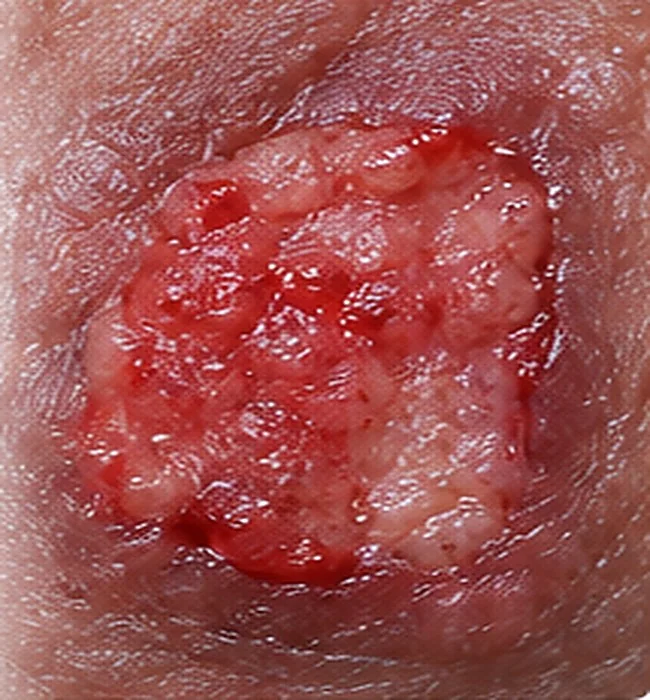
Educational illustration, not an actual clinical photograph. Signs vary and a diagnosis requires assessment.
A long-lasting ulcer should be examined rather than repeatedly treated with creams. Tissue sampling may be needed to establish the cause and exclude serious conditions.
No. Other infections, inflammatory problems and occasionally cancer can resemble it. Sometimes a biopsy or tissue test is needed.
A clinician may recommend a tissue smear or biopsy to look for Donovan bodies and rule out other important causes of a persistent ulcer.
Treatment generally requires antibiotics for at least three weeks and until the ulcer is fully healed. Follow-up matters because relapse can occur.
A long-standing or bleeding ulcer needs medical assessment: other infections and, sometimes, skin cancer can resemble donovanosis.
People commonly book an appointment for:
Assessment helps identify the likely cause, choose useful tests and explain treatment and follow-up without unnecessary medication.
Biopsy or tissue smear from lesion edge demonstrating Donovan bodies where available; exclude syphilis, HSV and malignancy.
A tissue smear or biopsy may show characteristic Donovan bodies. Persistent ulcers may need biopsy to rule out cancer and other conditions; routine blood STI tests alone cannot diagnose donovanosis.
Common concerns explained in plain language. A test result or photograph alone may not tell the whole story.
Donovanosis is an uncommon cause of persistent ulceration that can bleed easily. It may resemble other infections or even a skin cancer, particularly if the lesion is chronic or atypical. It is important not to label every non-healing genital sore as donovanosis without a medical examination.
Sometimes. A smear or biopsy may help confirm donovanosis or exclude other causes, including malignancy. The choice of specimen and test depends on the lesion and clinical suspicion. Biopsy is especially important when an ulcer is hard, unusual, recurrent or not responding to treatment.
Antibiotic treatment generally continues for at least three weeks and until the lesion has healed completely. Early stopping can leave disease inadequately treated. Follow-up is important to check healing, complications and whether another diagnosis should be reconsidered.
Donovanosis generally requires a prolonged, clinician-prescribed antibiotic course, typically at least three weeks and continued until all lesions have healed. Choice of antibiotic and monitoring depend on patient factors, local guidance and clinical response. Stopping when an ulcer merely looks smaller can lead to incomplete treatment.
Untreated or delayed-treatment donovanosis can cause extensive tissue damage, scarring, swelling or lymphatic obstruction, and secondary bacterial infection. These complications are not inevitable; early recognition and adequate therapy are important.
A persistent, atypical, indurated, bleeding or nonhealing ulcer should not be repeatedly treated as presumed donovanosis without reassessment. Tissue sampling may be required to identify Donovan bodies and to exclude other causes, including squamous cell carcinoma. Histology and specimen handling should be planned by the treating clinician.
Prolonged antibiotic therapy is often required, continued until lesions heal. Follow-up is important because relapse can occur.
Treatment requires a prolonged prescribed antibiotic course, typically at least three weeks and until the lesions are completely healed. Regular clinical review is important because relapse can occur.
A focused, non-judgmental assessment is tailored to your symptoms and exposure history. An examination or test is recommended only when clinically appropriate, with your consent.
We understand that concerns about genital symptoms, sexual contact or a positive test can feel personal. Your appointment is approached respectfully, without blame or judgment.
Medical confidentiality is subject to applicable law and clinical obligations. Please avoid sending intimate photographs or detailed sexual histories in an appointment enquiry.
Dr Neeraj Garg holds MBBS (IMS-BHU) and MD (IMS-BHU) qualifications and provides dermatology and venereology consultations in Dehradun. The focus is on explaining symptoms, interpreting appropriate tests and discussing a practical next step.
No. Donovanosis is caused by Klebsiella granulomatis and needs a different diagnostic and treatment approach.
Yes. Lesions are often painless but may bleed easily.
No. Other infections, inflammatory diseases and cancers can resemble it.
A persistent, atypical or nonhealing ulcer may need tissue testing to identify the cause and exclude other diseases, including cancer.
They are characteristic structures seen in infected tissue samples that help support the diagnosis.
Antibiotics are generally continued for at least three weeks and until lesions heal completely.
Yes. Untreated infection can lead to destructive lesions, scarring or swelling.
Yes. Relapse is possible even after apparent healing, so follow-up matters.
Sexual partners should be assessed according to exposure and findings; whether asymptomatic partners need medication is decided clinically.
Symptoms overlap, and some infections cause no symptoms. These links help you find information, not diagnose yourself.
This patient guide is educational and does not replace an individual clinical assessment. Treatment and testing recommendations may change with local guidance, pregnancy, other conditions and antibiotic resistance.
Request a confidential STD / STI consultation with Dr Neeraj Garg, MBBS (IMS-BHU), MD (IMS-BHU), in Dehradun. Get individual guidance about symptoms, reports, testing and next steps.
Request an Appointment ↗Appointment enquiry only: there is no need to send intimate images or detailed medical information through WhatsApp.
Patient information updated 10 October 2026. This page provides general education and cannot replace an individual medical assessment. The appearance of a symptom does not by itself prove an STI.