Can a painful sore be diagnosed as chancroid by appearance?
No. Herpes, syphilis and several non-STI conditions can look similar. An assessment and appropriate tests are important.
Chancroid is an uncommon bacterial infection that can cause painful sores and sometimes tender swellings in the groin. Other, more common ulcer causes must be checked.
Dr Neeraj Garg · MBBS (IMS-BHU), MD (IMS-BHU) · Dermatologist & STD / STI Specialist, Dehradun
Request an Appointment ↗For privacy, send only a simple appointment request through WhatsApp. Medical details can be discussed during consultation.
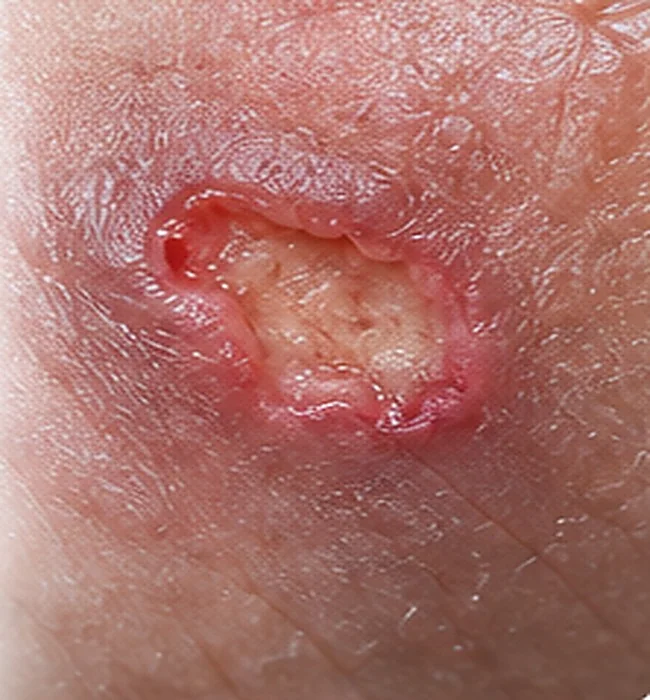
Educational illustration, not an actual clinical photograph. Signs vary and a diagnosis requires assessment.
Painful sores have several possible causes. Testing for herpes and syphilis is often important before a clinician considers chancroid.
No. Herpes, syphilis and several non-STI conditions can look similar. An assessment and appropriate tests are important.
Testing usually focuses on ruling out more common causes such as herpes and syphilis. Tests specifically for chancroid may not be available everywhere.
When chancroid is appropriately diagnosed, antibiotics are used. A follow-up visit helps confirm healing and assess swollen groin lymph nodes.
Painful ulcers are not always chancroid. Genital herpes, syphilis and non-infectious conditions can cause similar sores.
People commonly book an appointment for:
Assessment helps identify the likely cause, choose useful tests and explain treatment and follow-up without unnecessary medication.
Clinical evaluation and exclusion of syphilis and HSV; specialised H. ducreyi testing may be unavailable. Consider epidemiology and other ulcer causes.
Evaluation usually includes tests for genital herpes and syphilis. Specialised tests for the chancroid bacterium may not be available; an ulcer that is not healing needs reassessment.
Common concerns explained in plain language. A test result or photograph alone may not tell the whole story.
Chancroid is one possible cause of a painful genital sore, sometimes accompanied by tender or swollen lymph nodes in the groin. However, genital herpes, syphilis and other infections can produce overlapping symptoms. An examination is important rather than choosing antibiotics from a photograph.
Testing specifically for Haemophilus ducreyi may not be readily available in many settings. Clinicians may first evaluate more common ulcer causes and use available laboratory tests and follow-up findings. A suspected chancroid ulcer should not be diagnosed solely because it hurts.
Seek prompt medical evaluation for severe pain, rapidly worsening ulceration, fever, expanding redness or a fluctuant groin swelling. The appropriate treatment and need for partner evaluation depend on the diagnosis. A persistent ulcer needs reassessment if it is not healing as expected.
Chancroid classically causes one or more painful genital ulcers with a soft, irregular or undermined edge and a purulent or grey-yellow base. Tender enlarged groin lymph nodes may occur, sometimes forming a fluctuant bubo. Appearances overlap with genital herpes, syphilis and other causes; physical examination alone cannot confirm chancroid.
Antibiotic treatment is effective when diagnosis is appropriate. Clinical follow-up is needed to confirm ulcer healing and assess partners.
Antibiotics can treat confirmed or appropriately suspected chancroid. Review is generally recommended within 3–7 days to check ulcer improvement; painful swollen groin nodes may need additional assessment.
A focused, non-judgmental assessment is tailored to your symptoms and exposure history. An examination or test is recommended only when clinically appropriate, with your consent.
We understand that concerns about genital symptoms, sexual contact or a positive test can feel personal. Your appointment is approached respectfully, without blame or judgment.
Medical confidentiality is subject to applicable law and clinical obligations. Please avoid sending intimate photographs or detailed sexual histories in an appointment enquiry.
Dr Neeraj Garg holds MBBS (IMS-BHU) and MD (IMS-BHU) qualifications and provides dermatology and venereology consultations in Dehradun. The focus is on explaining symptoms, interpreting appropriate tests and discussing a practical next step.
Yes. They are often painful, with soft, irregular edges, but other ulcer conditions can look similar.
No. Herpes and other infections are more common causes in many settings.
Chancroid ulcers are often painful and soft, while a primary syphilis sore is often painless and firm; examination alone is not reliable.
Yes. Tender lymph nodes may enlarge or form a pus-filled bubo.
No. Testing for herpes and syphilis is important, and specific chancroid tests may not be widely available.
It is uncommon in many clinical settings, although frequency varies by region. Other ulcer causes are often more likely.
Symptoms usually begin improving within a few days with effective treatment. Follow-up is commonly advised after 3–7 days.
Yes. Sex partners may need examination and treatment based on the confirmed diagnosis and exposure timing.
No. Self-treatment can delay diagnosis of herpes, syphilis or a non-infectious cause.
Symptoms overlap, and some infections cause no symptoms. These links help you find information, not diagnose yourself.
This patient guide is educational and does not replace an individual clinical assessment. Treatment and testing recommendations may change with local guidance, pregnancy, other conditions and antibiotic resistance.
Request a confidential STD / STI consultation with Dr Neeraj Garg, MBBS (IMS-BHU), MD (IMS-BHU), in Dehradun. Get individual guidance about symptoms, reports, testing and next steps.
Request an Appointment ↗Appointment enquiry only: there is no need to send intimate images or detailed medical information through WhatsApp.
Patient information updated 10 October 2026. This page provides general education and cannot replace an individual medical assessment. The appearance of a symptom does not by itself prove an STI.