Mild acute paronychia without an abscess
Warm soaks, protection from further injury and, when appropriate, a prescription topical antibiotic may be sufficient. A topical anti-inflammatory medicine may be added selectively.
Paronychia means inflammation of the skin around a nail. Acute paronychia is commonly bacterial, sometimes forming an abscess that needs drainage. By contrast, chronic paronychia is usually an irritant-driven inflammatory problem rather than a persistent bacterial or fungal infection. Treatment depends on which is present.
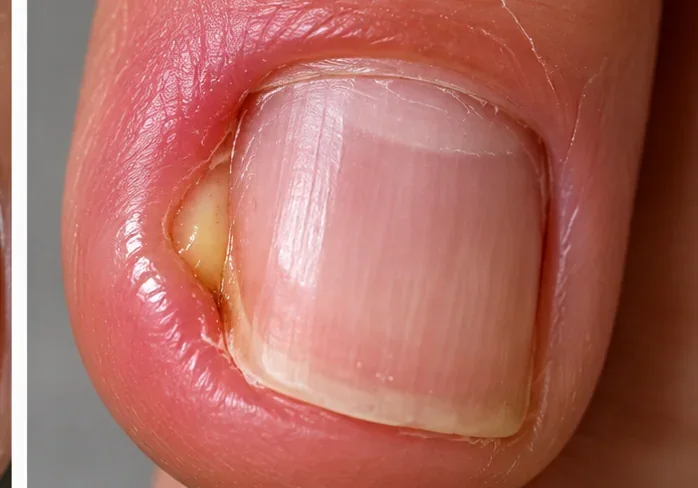
Pain, swelling and redness usually appear over hours to days, often beside one nail.
A yellow-white fluid pocket may form; pressure and throbbing can increase.
Swelling and tenderness recur for more than six weeks, sometimes involving several nails.
Ridges, irregular growth, discoloration or persistent nail-fold inflammation can develop.
A rapid painful change affecting one digit suggests acute disease; repeated symptoms involving several digits raise the possibility of chronic irritant disease.
Examination looks for a fluctuant collection of pus versus inflammation alone. Ultrasound is occasionally useful if uncertainty remains.
Nail biting, manicures, detergents, eczema, diabetes, immunosuppression, injury and ingrown nails can alter the approach.
Herpetic whitlow, felon, psoriasis and an unusual persistent nail-fold tumour may resemble paronychia. Herpetic whitlow must not be incised.
Routine bacterial swabs, blood tests and X-rays are not needed for uncomplicated cases. Cultures or imaging may be selected for severe, recurrent, unusual or non-healing presentations.
Warm soaks, protection from further injury and, when appropriate, a prescription topical antibiotic may be sufficient. A topical anti-inflammatory medicine may be added selectively.
A well-formed abscess generally needs clinician-performed drainage using a suitable technique and local anaesthesia if necessary. Do not squeeze or cut it yourself.
Tablet antibiotics are reserved for selected circumstances such as spreading cellulitis, systemic symptoms, immunocompromise or other significant risk factors. They are not automatically needed after adequate drainage.
Chronic paronychia is usually an inflammatory disorder of the nail-fold barrier, often maintained by frequent wet work, detergents, irritants and repeated cuticle trauma. Treatment starts with reducing these exposures: avoid picking or cutting the cuticle, keep hands dry where practical, use cotton-lined protective gloves for wet work and moisturise after washing. A dermatologist may prescribe a topical corticosteroid for the inflamed nail folds; topical tacrolimus may be considered in selected persistent cases. Neither is a universal self-treatment, and prolonged potent steroid use can cause local adverse effects. Candida may colonise affected folds, but routine repeated antifungal or antibiotic courses are not the main treatment unless a relevant infection is established. As inflammation settles, the cuticle seal can gradually reform; improvement often takes weeks to months. Persistent or unusual inflammation of one nail should be reassessed to exclude other causes.
Control hand eczema, assess any ingrown nail and manage a proven secondary infection when appropriate. Refractory single-nail disease may need further work-up.
Grouped clear blisters and severe finger pain may suggest herpes infection rather than a bacterial abscess. Herpetic whitlow should not be incised or drained like bacterial paronychia.
If the problem starts because a toenail edge digs into skin, our Ingrown Toenail guide explains that separate treatment pathway.
Investigations and treatment are chosen after a clinical examination. Do not start medicines or attempt procedures based only on this page. Images are AI-generated educational illustrations, not clinical patient photographs or treatment results.
Dr Neeraj Garg · MBBS (IMS-BHU), MD (IMS-BHU)
Maheshwari Hospital, Dalanwala, Dehradun · Consultation ₹800