Ring-shaped, scaly patches
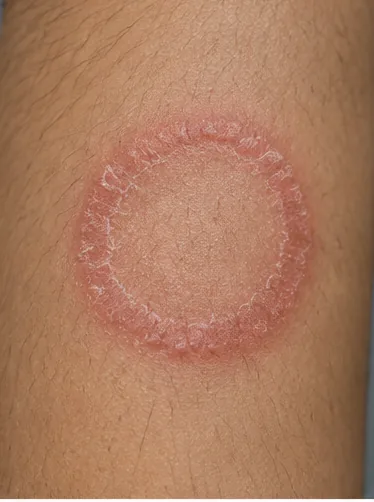
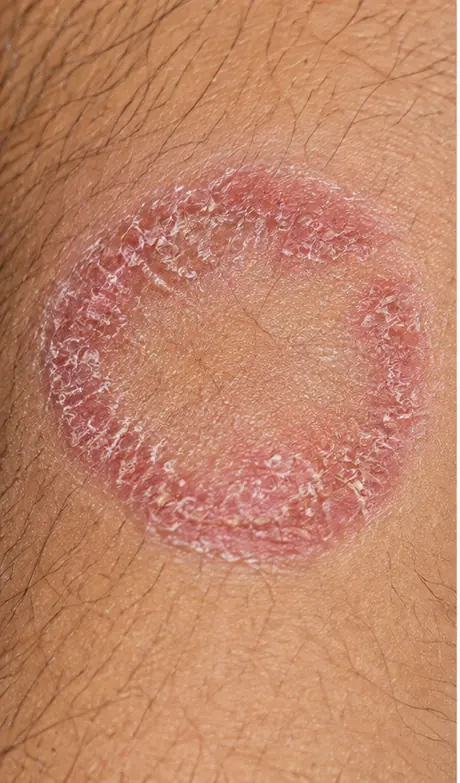
An itchy patch may gradually enlarge, with a more active scaly edge and sometimes a clearer centre.
Itching, scaly patches and groin rashes may be ringworm (daad), but eczema and other conditions can look similar. Steroid-containing combination creams may mask a fungal infection or make it harder to treat.
 Condition-focused care
AI-generated clinical illustration, not a patient photograph.
MBBS (IMS-BHU), MD (IMS-BHU)
Dermatologist & Venereologist · Dehradun
Dr Neeraj Garg completed both MBBS and MD at the Institute of Medical Sciences, Banaras Hindu University (IMS-BHU). He provides evidence-based assessment for skin, hair, nail and sexually transmitted conditions, with individualised care, clear counselling and patient privacy.
 MBBS + MDBoth from IMS-BHU
Ringworm is caused by dermatophyte fungi—not a worm. It can look different on different skin tones and body sites. A photograph alone cannot confirm the diagnosis.
An itchy patch may gradually enlarge, with a more active scaly edge and sometimes a clearer centre.
Jock itch (tinea cruris) may affect the inner thighs and groin folds, often worsened by friction and sweating.
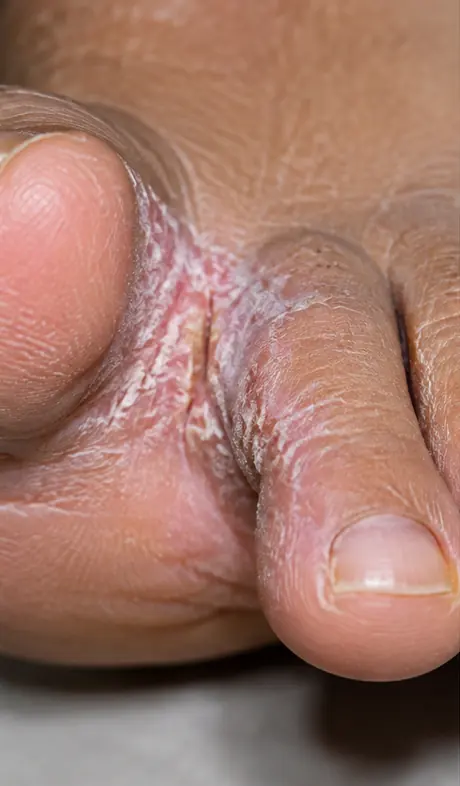
Peeling, itching or fissures between the toes may indicate athlete's foot (tinea pedis).
Steroid-mixed creams can reduce redness temporarily and change the usual appearance (tinea incognito).
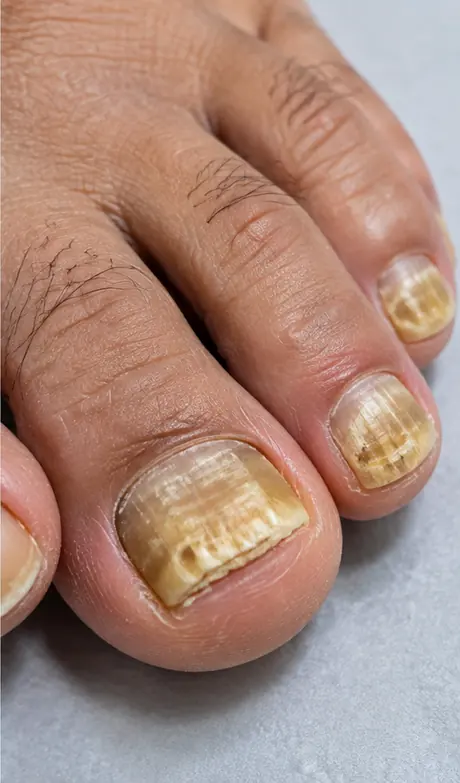
Illustrative medical visuals, not photographs of clinic patients. Appearance alone cannot confirm a diagnosis.
Early assessment is particularly useful if the rash does not behave like a simple, recent infection.
A rash affecting several areas, returning repeatedly, or appearing in household members deserves review.
Bring previously used cream tubes or photographs of their ingredients, especially if steroids were involved.
Prompt assessment is sensible for painful or pustular lesions, scalp or nail involvement, or poor response to appropriate therapy.
Not all itchy rings or groin rashes are dermatophyte infections. Eczema, psoriasis, contact dermatitis and other conditions can mimic them.
Clinical examination. Assess the edge of the rash, its distribution, prior medicines, feet and nails, and close contacts when relevant.
KOH microscopy. A small skin scraping, usually taken from an active scaly edge, may reveal fungal elements and help confirm tinea. A negative test does not always rule it out.
Further testing if necessary. Fungal culture or specialised testing may be considered for persistent, recurrent, unusual-looking or difficult-to-treat infections.
Blood tests are not routinely needed to diagnose uncomplicated ringworm. Your dermatologist may request other tests depending on the diagnosis or the planned medicines.
Treatment is individualised according to the site, extent, confirmation of infection, previous medicines and response. The information below is educational, not an individual prescription.
Uncomplicated tinea corporis or cruris can often be treated with an appropriate antifungal cream for the advised course. Apply it as directed, including to the lesion margin.
Widespread, recurrent, follicular or difficult-to-treat infections may need prescription tablets. Before prescribing oral treatment, the dermatologist considers drug interactions, liver disease, pregnancy-related risks and any need for monitoring.
Scalp ringworm generally requires oral antifungal therapy. Nail infections often need confirmation and longer treatment; simply using a skin cream may not be enough.
These are broad ranges—not a promise of recovery or a prescription. Recurrent or resistant disease may take longer.
Good habits support antifungal treatment but cannot replace it when a fungal infection is confirmed.
Dry the toe webs and skin folds after bathing; change sweaty clothes and wear loose, breathable garments.
Use separate towels, wash worn clothing and bedding regularly, and avoid direct contact with active infected areas.
Use treatment for the advised duration. Symptomatic household members or pets may also need assessment to prevent reinfection.
No. Nummular eczema, psoriasis and other conditions can resemble ringworm. Examination and sometimes a KOH scraping help clarify the diagnosis.
Many uncomplicated skin infections respond over a few weeks, while extensive, recurrent, scalp and nail infections may need longer. Complete the prescribed course even if itching improves earlier.
Yes. Dermatophytes can spread through skin-to-skin contact, including intimate contact, and through shared towels, clothes or bedding. A groin rash is not automatically a sexually transmitted infection.
Possible reasons include a wrong diagnosis, steroid-mixed creams, stopping too early, reinfection from another site or contact, or reduced antifungal susceptibility. Each needs a different response.
Usually not for uncomplicated skin ringworm. A KOH skin scraping is often more directly useful. Blood tests may be considered for other medical reasons or before certain oral treatments.
No. Oral antifungals can have drug interactions and may require precautions or monitoring, including in patients with liver conditions or during pregnancy. Do not take them without medical advice.
Brown marks can persist from post-inflammatory pigmentation after the active infection has settled. Residual colour alone does not establish ongoing fungus; a dermatologist can assess whether infection is still active.
Keeping the area dry may help, but oils, garlic, toothpaste or other home remedies have not been shown to reliably cure dermatophyte infection and may irritate the skin.
Not automatically. Anyone with a similar rash should be examined and treated when indicated. Routine oral treatment of symptom-free family members is not usually required.
Dr Neeraj Garg · MBBS (IMS-BHU), MD (IMS-BHU) · Maheshwari Hospital, Dalanwala, Dehradun. Consultation ₹800 · Pre-booking required.