Dr Neeraj Garg · Skin, Hair, Nail & STD Specialist · Dehradun← Visit Main Website
Dr Neeraj GargMBBS (IMS-BHU), MD (IMS-BHU)
A searchable guide to additional skin conditions

Other Skin Problems in Dehradun

Looking for a condition not listed on our main homepage? Browse 21 additional skin problems, including dandruff, dark circles, raised scars, painful foot corns, shingles and other rashes. Search using everyday symptoms or medical disease names.

✓ 21 additional skin conditions✓ Brief medical explanations✓ Search by disease or symptom✓ Dermatologist-led assessment
Showing all 21 conditions
Skin health directory

Explore Other Skin Problems

Common symptoms, causes and treatment options for conditions not already featured on the homepage. Use the search field to narrow the list.

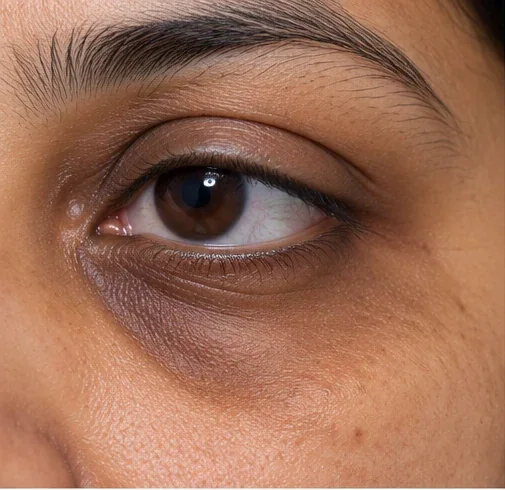
AI-generated educational clinical image illustrating Under-Eye Pigmentation (Dark Circles)
Periorbital pigmentation

Under-Eye Pigmentation (Dark Circles)

Dark circles or darkening beneath the eyes

Darkening under the eyes may relate to pigmentation, genetics, allergies, habitual rubbing, thin skin or natural under-eye hollowing. The cause determines which treatment may help.

dark circles, under eye darkening, black circles, dark skin below eyes.

See signs & treatment approach

Common clues: Brown pigmentation, shadowing from tear troughs, itchy eyelids or darkness under both eyes.

Evaluation & care: Review rubbing, allergic dermatitis, sun exposure and the facial anatomy. Sunscreen, gentle skin care and selected treatments can help; no single cream treats every cause.
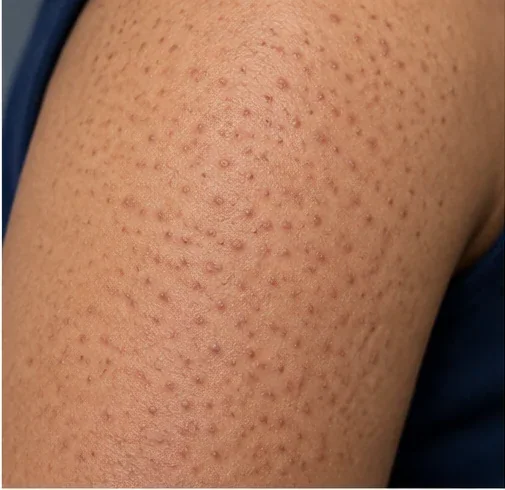
AI-generated educational clinical image illustrating Keratosis Pilaris (Chicken Skin)
Rough follicular bumps

Keratosis Pilaris (Chicken Skin)

Small rough bumps on arms, thighs or cheeks

Keratosis pilaris produces harmless tiny bumps where keratin collects around hair follicles. It is commonly described as “chicken skin” or persistently rough, bumpy skin.

chicken skin, tiny bumps on arms, rough bumpy arms, strawberry arms.

See signs & treatment approach

Common clues: Small, evenly spaced skin-coloured or reddish bumps on upper arms, thighs, buttocks or cheeks.

Evaluation & care: Diagnosis is usually clinical. Moisturisers and carefully selected urea, lactic acid or salicylic acid products can smooth the skin, although recurrence is common.

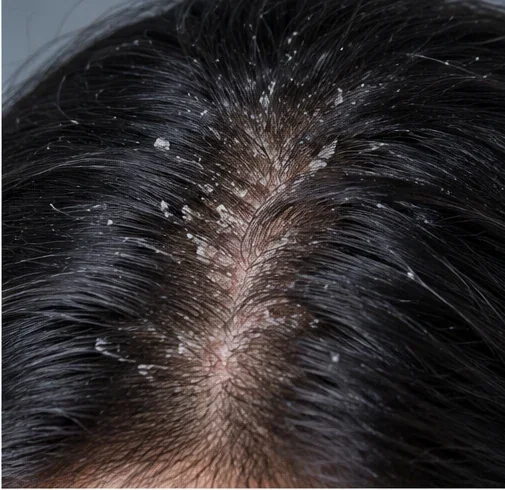
AI-generated educational clinical image illustrating Seborrhoeic Dermatitis / Dandruff
Scalp and facial flaking

Seborrhoeic Dermatitis / Dandruff

Persistent dandruff, oily flakes or itchy scalp

Seborrhoeic dermatitis can cause dandruff and itchy, flaky redness on the scalp, eyebrows, sides of the nose and behind the ears. It is inflammatory and often relapsing.

dandruff, dry flakes in hair, itchy scalp, flaky eyebrows.

See signs & treatment approach

Common clues: Greasy or dry flakes, scalp itching, facial scaling and redness around the eyebrows or ears.

Evaluation & care: Medicated antifungal shampoos and appropriate short-term anti-inflammatory treatment can control symptoms. It is not simply caused by poor hygiene.

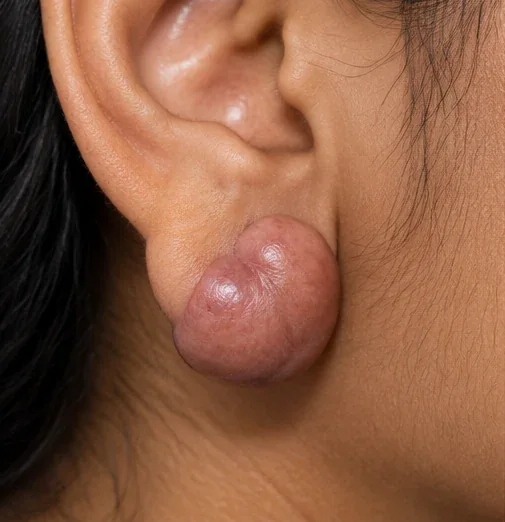
AI-generated educational clinical image illustrating Keloids & Raised Scars
Raised scars after injury

Keloids & Raised Scars

Thick scars after piercing, surgery or acne

Keloids are raised scars that extend beyond the original injury, sometimes causing itching, pain or cosmetic concern. Hypertrophic scars generally remain within the wound borders.

keloid scar, raised scar, ear piercing scar, thick scar.

See signs & treatment approach

Common clues: Firm, growing raised scars on earlobes, chest, shoulders or previous acne and surgical sites.

Evaluation & care: Treatment may involve intralesional medicines and other selected procedures. Recurrence can occur; assessment determines the safest approach.

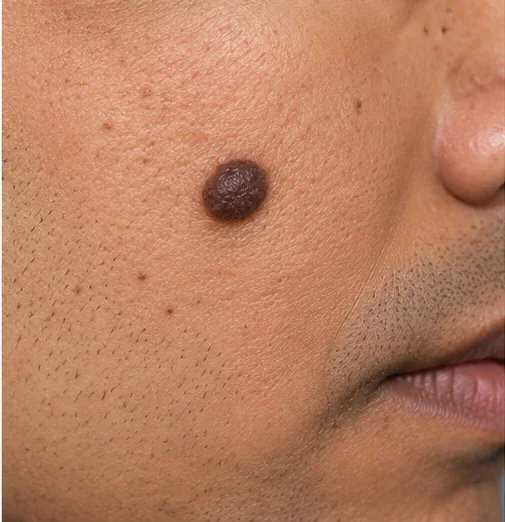
AI-generated educational clinical image illustrating Moles (Nevi) & Mole Removal
Examine before removal

Moles (Nevi) & Mole Removal

Raised moles, skin moles and changing spots

Most moles are benign. An unwanted raised mole should be examined first; radiofrequency ablation (RFA) may be considered only for selected, clearly benign lesions when tissue testing is not required.

mole removal, mole on face, til, black mole.

See signs & treatment approach

Common clues: Stable pigmented or skin-coloured growths; concerning signs include a changing shape, colour, size, spontaneous bleeding or an unusual appearance.

Evaluation & care: A dermatologist should examine moles, often with dermoscopy, before removal. Suspicious or changing lesions may need biopsy or excision with histopathology rather than destructive RFA.

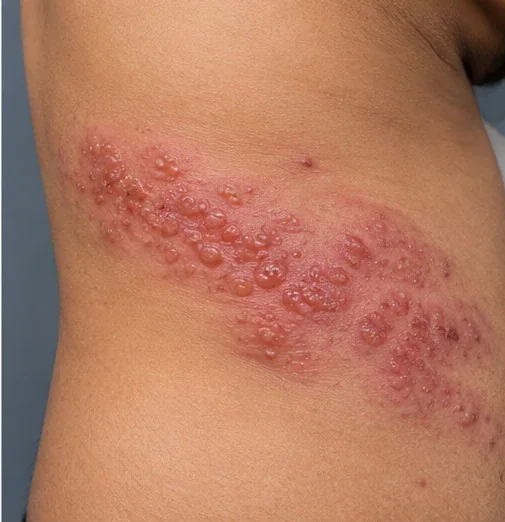
AI-generated educational clinical image illustrating Herpes Zoster (Shingles)
Painful viral blisters

Herpes Zoster (Shingles)

One-sided painful rash or burning blisters

Shingles occurs when the varicella-zoster virus reactivates, often producing pain, burning and grouped blisters along one side of the body or face.

shingles, herpes zoster, snake rash, painful blisters.

See signs & treatment approach

Common clues: Pain, tingling or burning before a stripe-like blistering eruption, usually limited to one side.

Evaluation & care: Early clinical assessment helps determine antiviral treatment and pain management. A rash near the eye, eye pain, severe illness or immunosuppression requires urgent assessment.

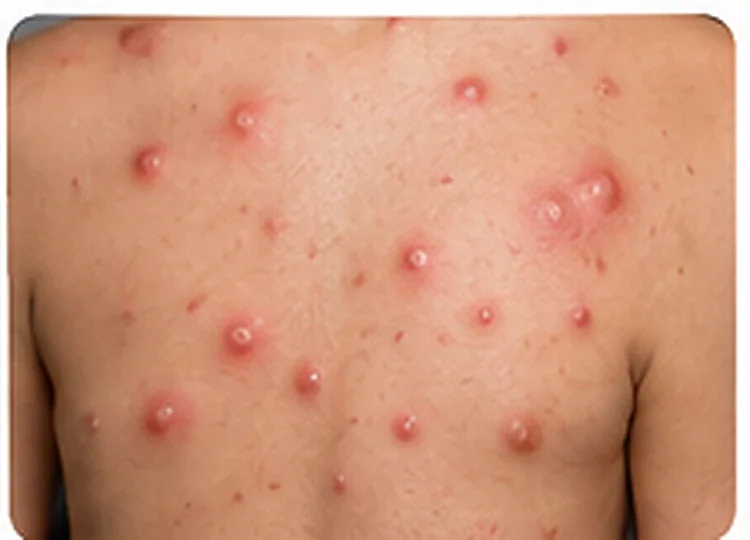
AI-generated educational clinical image illustrating Varicella (Chickenpox)
Contagious viral illness

Varicella (Chickenpox)

Fever and itchy fluid-filled blisters

Chickenpox is a contagious viral illness that may cause fever and successive crops of itchy spots and fluid-filled blisters. Adults and high-risk patients can become seriously ill.

chicken pox, chickenpox, varicella, water blisters.

See signs & treatment approach

Common clues: Spots at different stages, from red bumps to vesicles and crusts, often on the trunk and face.

Evaluation & care: Diagnosis is often clinical. Avoid close contact with susceptible people and stay isolated until all blisters crust over (or, if lesions do not crust, until no new spots appear for 24 hours). Discuss skin care and whether antivirals are indicated, especially in high-risk patients.

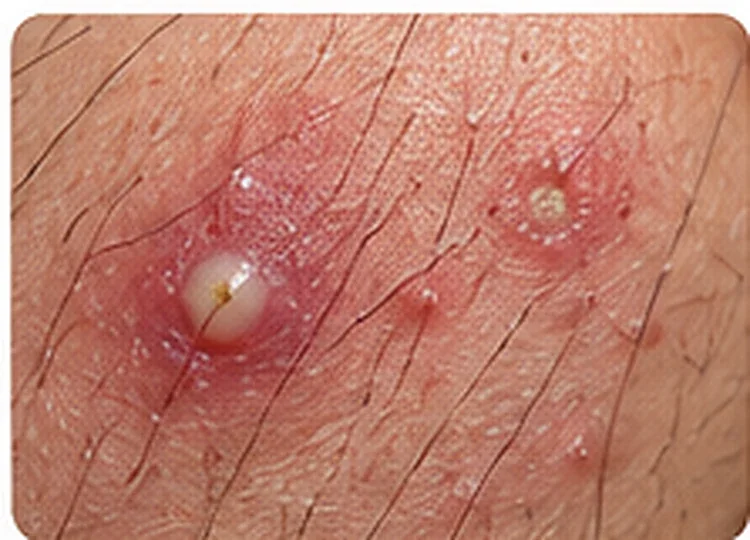
AI-generated educational clinical image illustrating Folliculitis & Bacterial Skin Infections
Hair follicle infection

Folliculitis & Bacterial Skin Infections

Pus bumps, boils or infected hair follicles

Folliculitis causes small red or pus-filled bumps centred on hair follicles, commonly after shaving, sweating or friction. Bacteria are one cause; other conditions can resemble it.

folliculitis, boils, repeated boils, pus filled bumps.

See signs & treatment approach

Common clues: Tender pustules around hairs, recurrent boils or inflamed bumps on the beard, scalp, trunk or thighs.

Evaluation & care: Examination guides hygiene advice and topical or oral treatment when appropriate. Recurrent or severe infections may need bacterial culture and evaluation for predisposing factors.

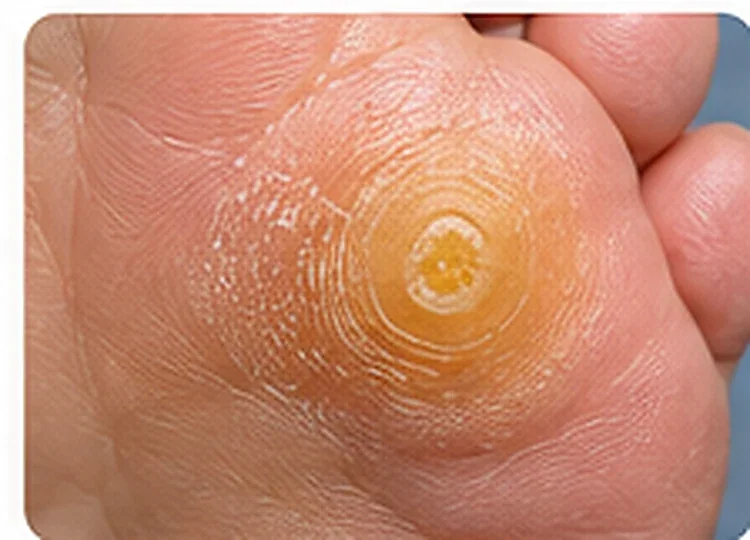
AI-generated educational clinical image illustrating Corns & Calluses (Hard Skin on Feet)
Pressure-related thick skin

Corns & Calluses (Hard Skin on Feet)

Painful corn on toe or sole

Corns are localised areas of thick skin that may hurt on walking, while calluses are broader thickened patches caused by repeated friction and pressure.

corn in foot, painful corn, hard skin on sole, callus.

See signs & treatment approach

Common clues: Painful hard centre on a toe or the sole; thick callused skin over pressure points.

Evaluation & care: Off-loading pressure, footwear changes and careful reduction of thick skin are important. RFA may be considered for selected painful corns after diagnosis, but does not correct ongoing pressure and is not routine treatment for every callus.

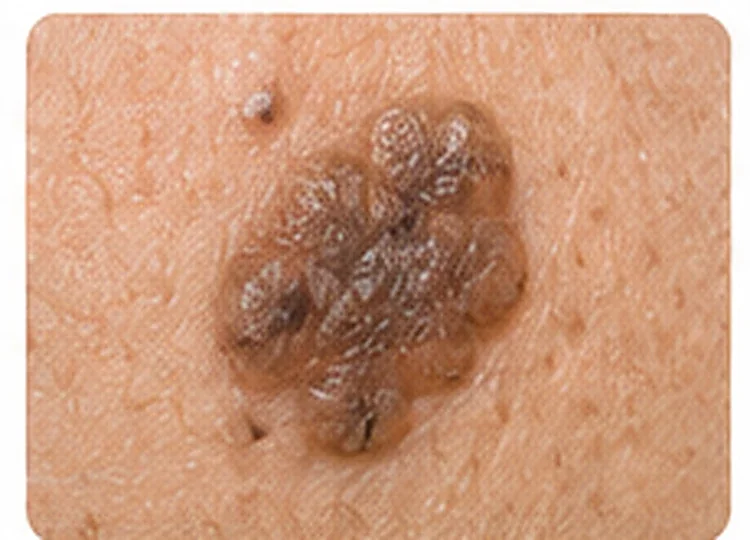
AI-generated educational clinical image illustrating Seborrhoeic Keratosis (Benign Age Spots)
Benign brown raised growths

Seborrhoeic Keratosis (Benign Age Spots)

Brown or black “stuck-on” growths

Seborrhoeic keratoses are common benign raised growths that can resemble warts or moles. They often become more noticeable with age and may catch on clothing.

seborrheic keratosis, old age wart, age spot, brown raised growth.

See signs & treatment approach

Common clues: Waxy, rough or “stuck-on” brown or black plaques on the face, chest, back or elsewhere.

Evaluation & care: Clinical and dermoscopic assessment confirm the likely diagnosis. Selected confirmed benign lesions can be removed with RFA or other methods; uncertain lesions need tissue assessment first.

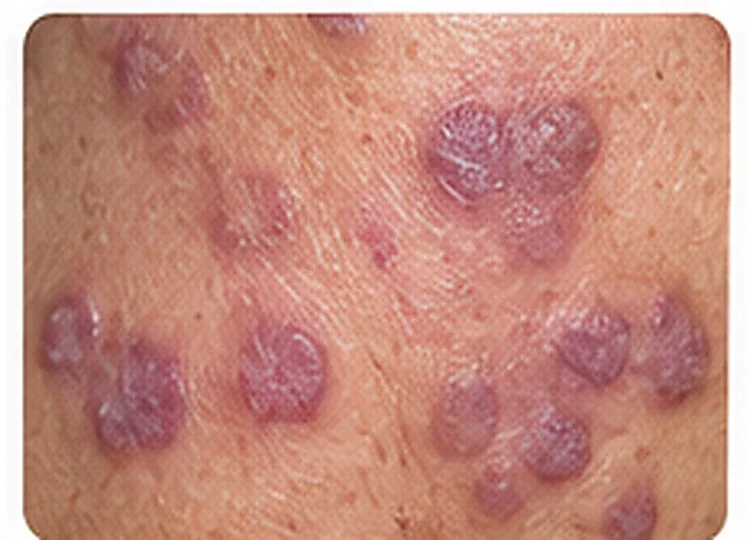
AI-generated educational clinical image illustrating Lichen Planus
Inflammatory skin or mucosal disease

Lichen Planus

Itchy purple-brown patches or mouth lesions

Lichen planus is an inflammatory condition that may affect the skin, mouth, scalp or nails. Skin lesions are often itchy, flat-topped, reddish-purple or brown bumps.

lichen planus, purple itchy bumps, purple rash on wrist, white lines in mouth.

See signs & treatment approach

Common clues: Itchy wrist or ankle lesions, mouth lacy white patches, nail changes or scalp inflammation.

Evaluation & care: Examination and sometimes biopsy help distinguish it from similar diseases. Treatment varies by site and severity; persistent oral lesions need follow-up.

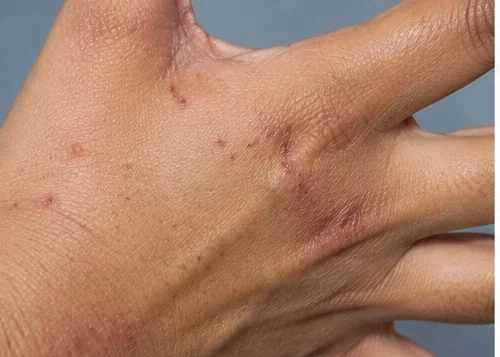
AI-generated clinical close-up of scabies-like papules and scratching marks around fingers
Contagious mite infestation

Scabies

Severe itching, often worse at night

Scabies is caused by tiny mites in the skin. Itching is often intense at night, and bumps or burrows may appear between the fingers, on wrists or around the waist.

itching at night, family members itching, small itchy bumps.

See signs & evaluation

Common clues: Night-time itching; similar symptoms in close contacts; small papules or burrows.

Evaluation & care: Clinical examination is often sufficient. Correctly used anti-scabies treatment and simultaneous management of close contacts may be needed.

Itching may continue for a few weeks after successful treatment; persistent new lesions require reassessment.

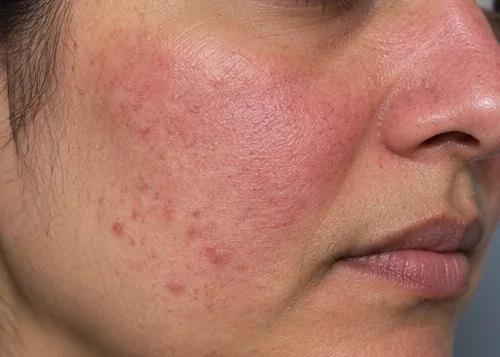
AI-generated clinical close-up of rosacea-like facial redness and inflammatory papules
Facial inflammation

Rosacea

Redness, flushing, burning or bumps

Rosacea causes recurrent flushing, persistent central facial redness, stinging and sometimes small acne-like inflammatory bumps. It can also affect the eyes.

red face, flushing cheeks, burning sensitive face.

See signs & evaluation

Common clues: Redness on cheeks and nose, easy flushing, sensitive skin and visible fine vessels.

Evaluation & care: Identify personal triggers, use gentle skin care and sunscreen, and choose site-appropriate prescription medicines.

Painful red eyes, light sensitivity or blurred vision need prompt assessment.

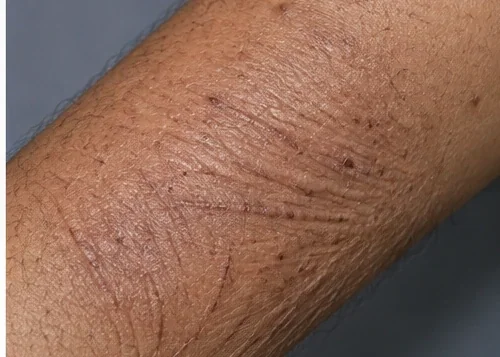
AI-generated close-up of chronically scratched and thickened skin on a forearm
Symptom needing evaluation

Chronic Itching (Pruritus)

Persistent itching with or without rash

Itching lasting longer than six weeks can arise from dry skin, a skin disorder, medicines or sometimes internal conditions. Some patients have no obvious primary rash.

whole body itching, itching without rash, night-time scratching.

See signs & evaluation

Common clues: Sleep-disturbing itch, scratch marks, dry thickened skin or persistent itch without a rash.

Evaluation & care: A detailed history and examination guide treatment. Blood tests are selected according to symptoms and examination rather than ordered blindly.

Seek evaluation for unexplained widespread itch, especially alongside weight loss, jaundice or other systemic symptoms.

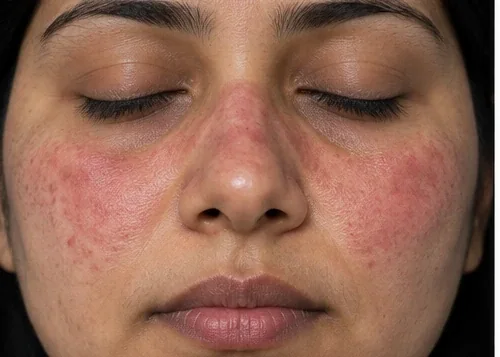
AI-generated clinical example of a bilateral malar-pattern facial rash
Autoimmune condition

Systemic Lupus Erythematosus (SLE)

Sun-sensitive rash and possible systemic symptoms

SLE is an autoimmune disease that may cause a butterfly-pattern facial rash, sun sensitivity, mouth ulcers or hair changes, alongside joint or other organ symptoms.

butterfly rash, lupus rash, sun allergy with joint pain.

See signs & evaluation

Common clues: Sun-triggered skin rash plus fatigue, painful joints, mouth sores or unexplained fevers.

Evaluation & care: Examination and selected blood or urine tests help decide if a wider autoimmune evaluation is needed. Dermatology and rheumatology care may both be involved.

A skin rash alone cannot establish a diagnosis of SLE. Breathlessness, chest pain or new leg swelling require prompt medical care.

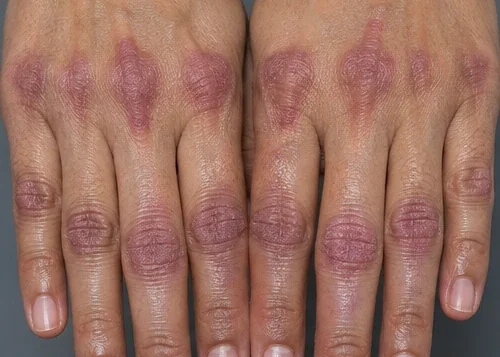
AI-generated clinical example of Gottron-like purple scaly papules over knuckles
Skin and muscle inflammation

Dermatomyositis

Purple-toned rash over eyelids or knuckles

Dermatomyositis may produce dusky or violet changes around the eyelids, scaly bumps over the knuckles and sun-sensitive rashes; some patients develop muscle weakness.

purple eyelid rash, rash on knuckles, skin rash with muscle weakness.

See signs & evaluation

Common clues: Rash around the eyelids, scaly knuckle lesions, difficulty climbing stairs or rising from a chair.

Evaluation & care: Prompt specialist evaluation may include skin and strength examination, blood tests and assessment for lung or other organ involvement.

New muscle weakness, swallowing difficulty or shortness of breath need timely medical assessment.

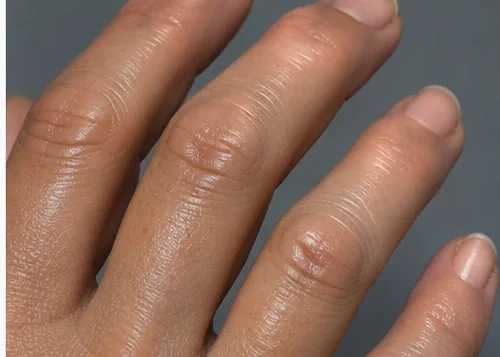
AI-generated clinical close-up of tight shiny skin on fingers suggestive of sclerodactyly
Connective-tissue condition

Systemic Sclerosis (Scleroderma)

Tight or shiny skin, especially on fingers

Systemic sclerosis can cause thickened, tight skin on the fingers or face and colour changes of fingers in the cold (Raynaud phenomenon). Internal organs may also be affected.

tight shiny fingers, scleroderma, fingers turn white in cold.

See signs & evaluation

Common clues: Puffy or tight fingers, reduced skin flexibility, fingertip sores or cold-induced colour changes.

Evaluation & care: Early assessment can identify skin changes and guide rheumatology evaluation for circulation, lungs and other organs.

Finger ulcers, worsening breathlessness or chest symptoms require prompt attention.

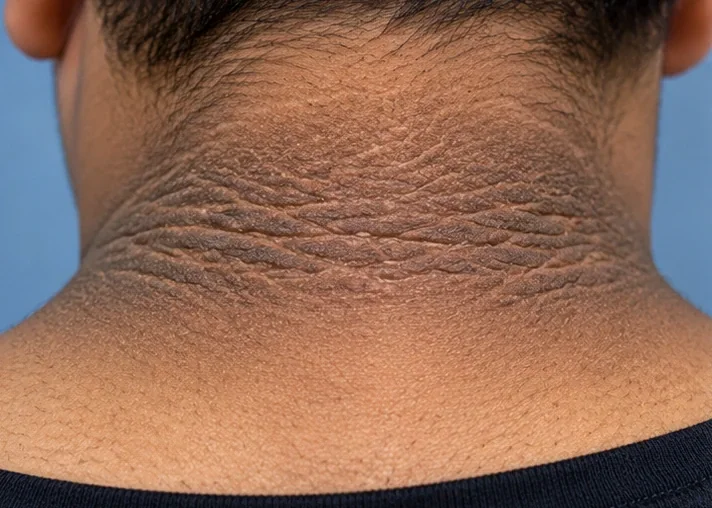
AI-generated clinical example of dark velvety thickening at the back of the neck
Darkened, thickened skin

Acanthosis Nigricans

Velvety dark neck or underarm patches

Acanthosis nigricans causes darker, velvety, thickened skin, commonly at the back of the neck or underarms. It is often associated with insulin resistance, though causes vary.

dark neck not dirt, black neck, velvety underarm skin.

See signs & evaluation

Common clues: Gradually darkening, textured folds that do not disappear with scrubbing.

Evaluation & care: Assessment may include weight, metabolic and medicine history, with blood sugar tests if indicated. Treatment targets contributing causes as well as skin care.

Aggressive scrubbing or unsupervised bleaching products can irritate the skin.

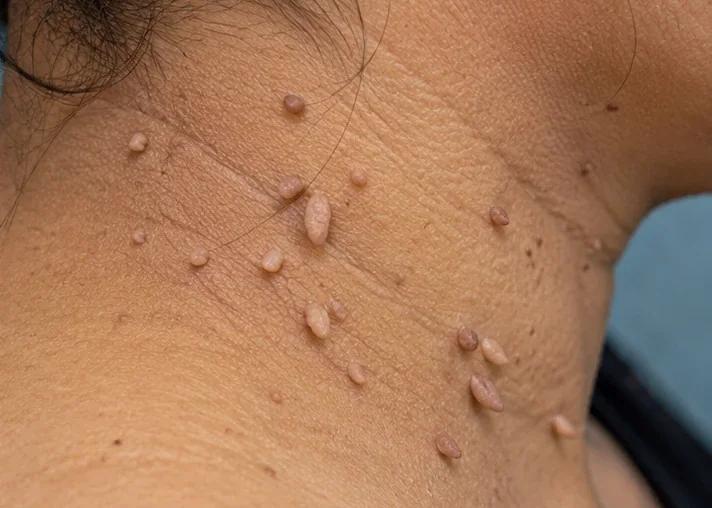
AI-generated clinical example of multiple small pedunculated skin tags on neck skin
Usually benign growths

Skin Tags (Acrochordons)

Soft, small, hanging skin growths

Skin tags are common benign growths, especially on the neck, eyelids and underarms. They are not the same as viral warts and usually need removal only if troublesome.

hanging skin growths, small neck tags, skin tags underarms.

See signs & evaluation

Common clues: Soft flesh-coloured or darker protrusions, sometimes attached by a small stalk.

Evaluation & care: A dermatologist first checks that the growth is a skin tag; selected lesions can be removed by a suitable office procedure such as radiofrequency.

Avoid cutting or burning skin growths at home; an uncertain or changing growth needs examination.

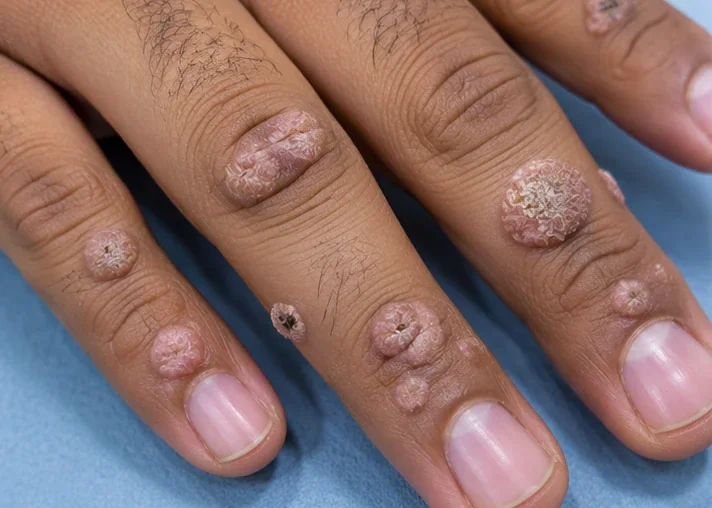
AI-generated clinical close-up of common rough HPV-type warts on fingers
Common viral growths

HPV Skin Warts (Verrucae)

Rough bumps on hands or soles

Common skin warts are caused by human papillomavirus (HPV). They often appear as firm, rough bumps on fingers, hands or feet and can spread through contact.

hand warts, plantar wart, rough viral wart.

See signs & evaluation

Common clues: Rough raised bumps; plantar warts can hurt when walking or standing.

Evaluation & care: Management depends on site and symptoms and may include topical agents or a supervised removal procedure. Recurrence can occur.

Not every skin growth is a wart; examination helps distinguish warts from skin tags, corns and other lesions.

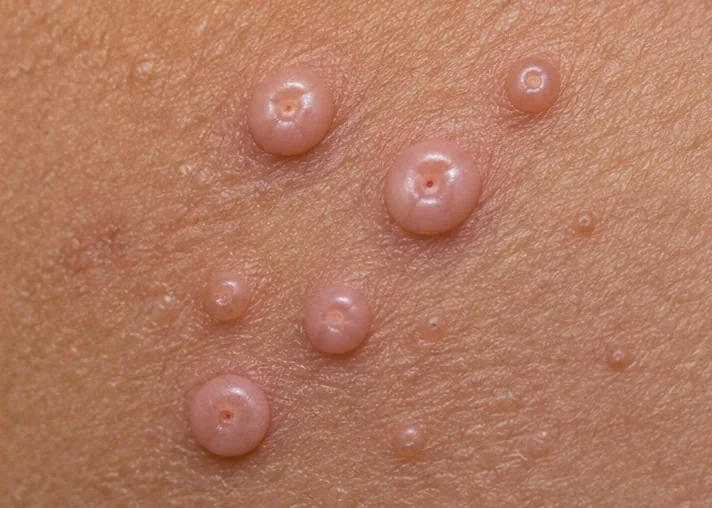
AI-generated clinical close-up of pearly molluscum-like papules with central dimples
Contagious viral papules

Molluscum Contagiosum

Small pearly bumps with a central dimple

Molluscum is a viral skin condition that causes small, smooth, pearly bumps, often with a central depression. It is common in children but may also affect adults.

water warts, pearly skin bumps, small bumps with central dimple.

See signs & evaluation

Common clues: Clusters of smooth, dome-shaped bumps with a characteristic central dimple.

Evaluation & care: Many cases resolve without treatment; removal can be considered for selected lesions depending on number, site, irritation and spread.

Avoid squeezing or scratching bumps because this may spread the virus or cause inflammation.

Images are original AI-generated educational illustrations, not photographs of clinic patients. Similar-looking rashes and growths may have different diagnoses.

No matching disease found.

Try a different name or symptom, or contact the clinic to discuss your concern.

How we evaluate an unfamiliar skin problem

Skin conditions can resemble each other. An appointment starts with your symptoms, examination, relevant medical history and a practical explanation of the next steps. Tests or referrals are suggested only when they are clinically useful.

  • Examine the distribution and appearance of lesions
  • Review onset, itch, progression, contacts and medicines
  • Consider investigations where findings indicate a need
  • Discuss treatment, follow-up and specialist referral if appropriate

Not sure what your skin condition is?

Consult Dr Neeraj Garg · MBBS (IMS-BHU), MD (IMS-BHU) · Maheshwari Hospital, Dalanwala, Dehradun · Consultation ₹800.

Book Confidentially on WhatsApp →
Call ClinicWhatsApp Booking