Symmetrical facial patches
Irregular brown or grey-brown patches often affect both cheeks, forehead or upper lip. Sun exposure and hormonal factors commonly contribute.
Dark facial patches? Identify the cause before treating them.
Melasma, post-acne marks and other types of facial pigmentation may look similar but respond to different treatments. Get an evidence-informed plan focused on accurate diagnosis, sun protection, safe topical medicines and realistic long-term control.
Consultation ₹800 · Maheshwari Hospital, Dalanwala, Dehradun
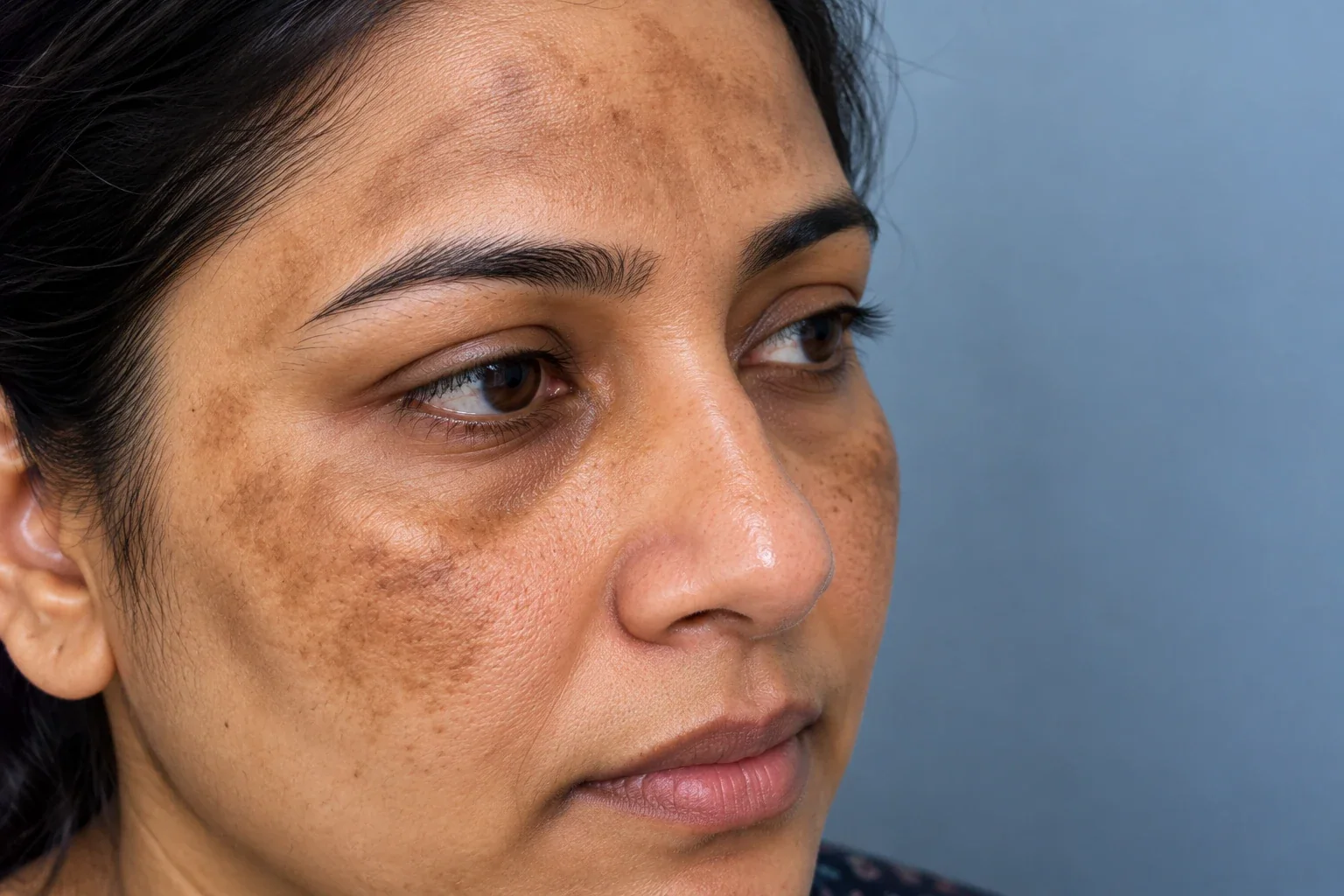 Melasma care · Diagnosis first
AI-generated educational medical illustration, not a patient photograph.
Melasma is an acquired pigmentation disorder that causes irregular brown or grey-brown patches, often on the cheeks, forehead or upper lip. It is not contagious. It can improve with treatment but may relapse, especially with continuing light exposure.
MBBS (IMS-BHU), MD (IMS-BHU)
Dermatologist & Venereologist · Dehradun
Dr Neeraj Garg completed both MBBS and MD at the Institute of Medical Sciences, Banaras Hindu University (IMS-BHU). He provides evidence-based assessment for skin, hair, nail and sexually transmitted conditions, with individualised care, clear counselling and patient privacy.
 MBBS + MDBoth from IMS-BHU
Melasma is only one reason skin becomes darker. Getting the correct diagnosis matters because the treatment and chance of recurrence differ.
Irregular brown or grey-brown patches often affect both cheeks, forehead or upper lip. Sun exposure and hormonal factors commonly contribute.
Acne, eczema, picking, burns and irritated skin can leave dark marks after the original inflammation improves. The underlying problem should be controlled.
Freckles, lentigines, pigmented contact dermatitis, lichen planus pigmentosus and some medication-related changes can resemble melasma. Unusual or changing lesions need clinical assessment.
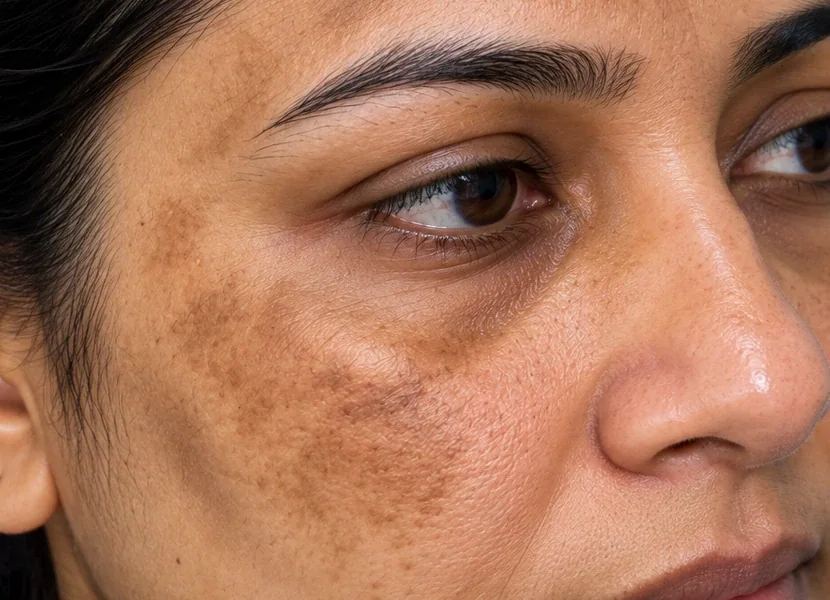
AI-generated illustration · Cheek detail
Colour alone cannot tell which type of pigmentation is present. A dermatologist considers the pattern, recent inflammation, cosmetics, medicines, onset and exposure history before selecting treatment. A single spot that changes size, colour or shape should not be assumed to be melasma.
Melasma is multifactorial. The visible dark colour comes from increased pigmentation, not poor hygiene or a superficial layer of dirt.
UV radiation and visible light can worsen melasma, including on darker skin tones. Consistent protection is central to treatment.
Pregnancy and certain hormonal treatments may contribute to melasma in susceptible individuals. Not everyone has a hormonal trigger.
Family history and genetic factors can increase predisposition; many patients have no known affected relative.
Harsh skin products, excessive friction and repeated heat exposure may aggravate facial pigmentation in some patients.
Dark patches that continue to spread or do not improve with gentle skin care deserve an accurate diagnosis before trying multiple bleaching products.
New or increasingly noticeable pigmentation, especially across the cheeks, forehead or upper lip, may need a structured management plan.
Treatment should address the acne, eczema or irritant responsible, as well as the leftover pigmentation.
A solitary spot changing in shape, colour, border, bleeding or growing differently from surrounding pigmentation needs prompt clinical assessment.
The goal is to identify the cause, review contributing factors and agree on a safe plan with realistic expectations.
Discuss onset, pregnancy or hormonal factors, sunlight, cosmetics, procedures, medication use and earlier treatments.
Examine distribution and skin changes. Dermoscopy or Wood’s lamp can be helpful in selected cases but is not needed for everyone.
Choose suitable sunscreen, prescription creams and, when appropriate, supervised glycolic acid peeling according to your skin type and tolerance.
Check improvement and irritation, adjust treatment and plan ongoing protection to help reduce recurrence.
Melasma, pigmentation after acne and other pigmentary disorders can overlap in appearance. A clinician also checks for ongoing inflammation or contact reactions that keep the skin darkening.
Look at the pattern. The size, symmetry, borders and distribution across facial sites can help distinguish melasma from its mimics.
Review products and exposures. Ask about fairness creams, steroid combinations, hair dyes, fragrances, acne products, sun exposure and previous peels.
Choose tests selectively. Dermoscopy or Wood's lamp examination may support assessment. Most patients do not need a biopsy or extensive blood tests.
For melasma, use daily broad-spectrum SPF 30 or higher; SPF 50+ is a useful option. Tinted formulations containing iron oxides help protect against visible light, which may aggravate pigmentation. Reapply when outdoors as directed.
Choose a sunscreen that suits your skin, seek shade when possible, use a hat or protective covering, and avoid harsh scrubbing or products that sting. Consistency matters more than applying many products at once.
The approach depends on diagnosis, skin sensitivity, pregnancy plans, earlier treatment and how much pigmentation affects day-to-day confidence.
Daily broad-spectrum tinted sunscreen containing iron oxides and practical shade protection help reduce treatment failure and relapse. Even effective creams work poorly when light exposure continues.
Selected patients may benefit from hydroquinone-containing regimens, including carefully supervised short courses of triple-combination treatment. Azelaic acid and other agents may suit particular cases. Choice and duration matter.
Dermatologist-supervised superficial glycolic acid peels may help selected patients with melasma as part of a comprehensive treatment plan. A carefully planned peel may gradually lighten superficial pigmentation when combined with appropriate home treatment and sun protection.
Appropriate preparation and aftercare help reduce irritation and the risk of post-inflammatory hyperpigmentation.
Melasma is often recurrent. A peel can support a treatment plan, but it does not permanently remove pigmentation.
Improvement is usually gradual and may take several months; individual results vary.
Follow-up helps decide whether to continue, adjust or pause treatment if irritation occurs.
Continue tinted sunscreen, gentle skin care and any prescribed maintenance regimen to help limit relapse.
Simple consistent skin care reduces avoidable irritation while prescribed treatment works gradually.
A broad-spectrum tinted sunscreen containing iron oxides, combined with shade and hats, helps limit UV and visible-light exposure.
Avoid aggressive rubbing, exfoliation or irritating DIY remedies. Irritation can leave additional dark marks.
Active pimples, eczema and picking can keep creating new dark spots. Treat the underlying problem as well.
Unsupervised combinations can cause acne, skin thinning and rebound problems. Use doctor-prescribed regimens appropriately.
Improvement often takes several months. Stopping sun protection after patches fade may contribute to recurrence.
Seek assessment for rapid change, bleeding, inflammation or a pigmentation pattern unlike your usual patches.
No. Melasma is a pigmentary disorder, not a fungal infection. It does not spread from one person to another.
Yes. Post-inflammatory pigmentation, freckles, lentigines, pigmented contact dermatitis and other disorders can appear similar. Treatment depends on the diagnosis.
Melasma often follows a symmetrical pattern on sun-exposed facial skin. Hormonal factors and inherited susceptibility may also contribute.
Use a broad-spectrum sunscreen with SPF 30 or higher, preferably tinted with iron oxides to help protect against visible light. Regular application, sufficient amount and outdoor reapplication matter.
No. Melasma is generally diagnosed clinically. Tests are used only if symptoms, history or examination suggest another condition.
Many patients improve, but melasma may recur even after good clearance. Light protection and an individual maintenance plan are important.
No. Triple combinations typically contain hydroquinone, a retinoid and a topical steroid. They should be used only in supervised courses due to potential adverse effects with prolonged unsupervised use.
Do not self-use these medicines during pregnancy. Discuss pregnancy, breastfeeding or plans to conceive with your dermatologist before starting any pigment-reducing treatment.
No. Our clinic offers supervised superficial glycolic acid peels for selected patients as an addition to sunscreen and prescribed topical care. They can help lighten some patches but do not permanently cure melasma. Irritation or overly aggressive peeling can worsen pigmentation.
It varies by diagnosis and treatment. Melasma improvement commonly takes several months, and some cases need longer. Consistency and avoiding irritation are essential.
Not always. Acne-related pigmentation needs control of active acne and irritation, while melasma care places particular emphasis on long-term light protection and recurrence prevention.
Dr Neeraj Garg · MBBS (IMS-BHU), MD (IMS-BHU) · Maheshwari Hospital, Dalanwala, Dehradun. Consultation ₹800 · Pre-booking recommended.