The healed area may sink below the surrounding skin, producing depressed scars such as ice-pick, boxcar and rolling scars.
Home / Skin Problems / Acne Scar Treatment
ACNE SCARS • DERMATOLOGIST IN DEHRADUN
Acne is gone, but the scars remain?Treat the scar type—not just the surface.
Ice-pick, boxcar, rolling and raised scars are different. We assess scar depth and skin type before considering TCA CROSS, subcision or microneedling—with realistic expectations for improvement.
Scar-type assessment100% TCA CROSSSubcisionDermaroller & DermapenMicroneedling with PRP
Consultation fee ₹800 • Pre-booking required • No advance booking payment
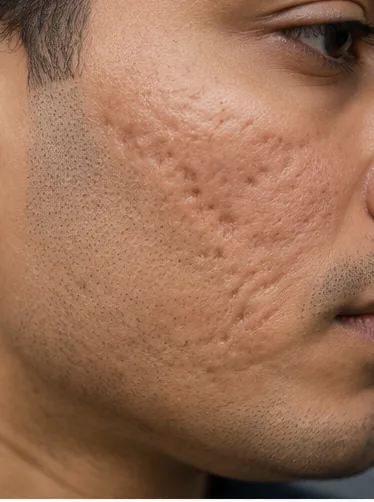 Scar-type assessment
AI-generated clinical illustration, not a patient photograph.
✚Dermatologist-led evaluation
✓Diagnosis before treatment
✦Clear counselling & follow-up
MEET YOUR DERMATOLOGIST
Dr Neeraj Garg
MBBS (IMS-BHU), MD (IMS-BHU)
Dermatologist & Venereologist · Dehradun
Dr Neeraj Garg completed both MBBS and MD at the Institute of Medical Sciences, Banaras Hindu University (IMS-BHU). He provides evidence-based assessment for skin, hair, nail and sexually transmitted conditions, with individualised care, clear counselling and patient privacy.
Book Consultation Consultation ₹800
 MBBS + MDBoth from IMS-BHU
01 / UNDERSTAND YOUR SCAR TYPE
Not every acne scar is the same.
The shape and depth of a scar matter more than its size alone. Many people have a mixture of scar types.
Why do acne scars form?
Inflammatory acne can damage the deeper supporting tissue of the skin. How the skin repairs that injury influences the scar that remains.
Healing tissue may build up above the skin, producing raised hypertrophic or keloid-type scars in susceptible people.
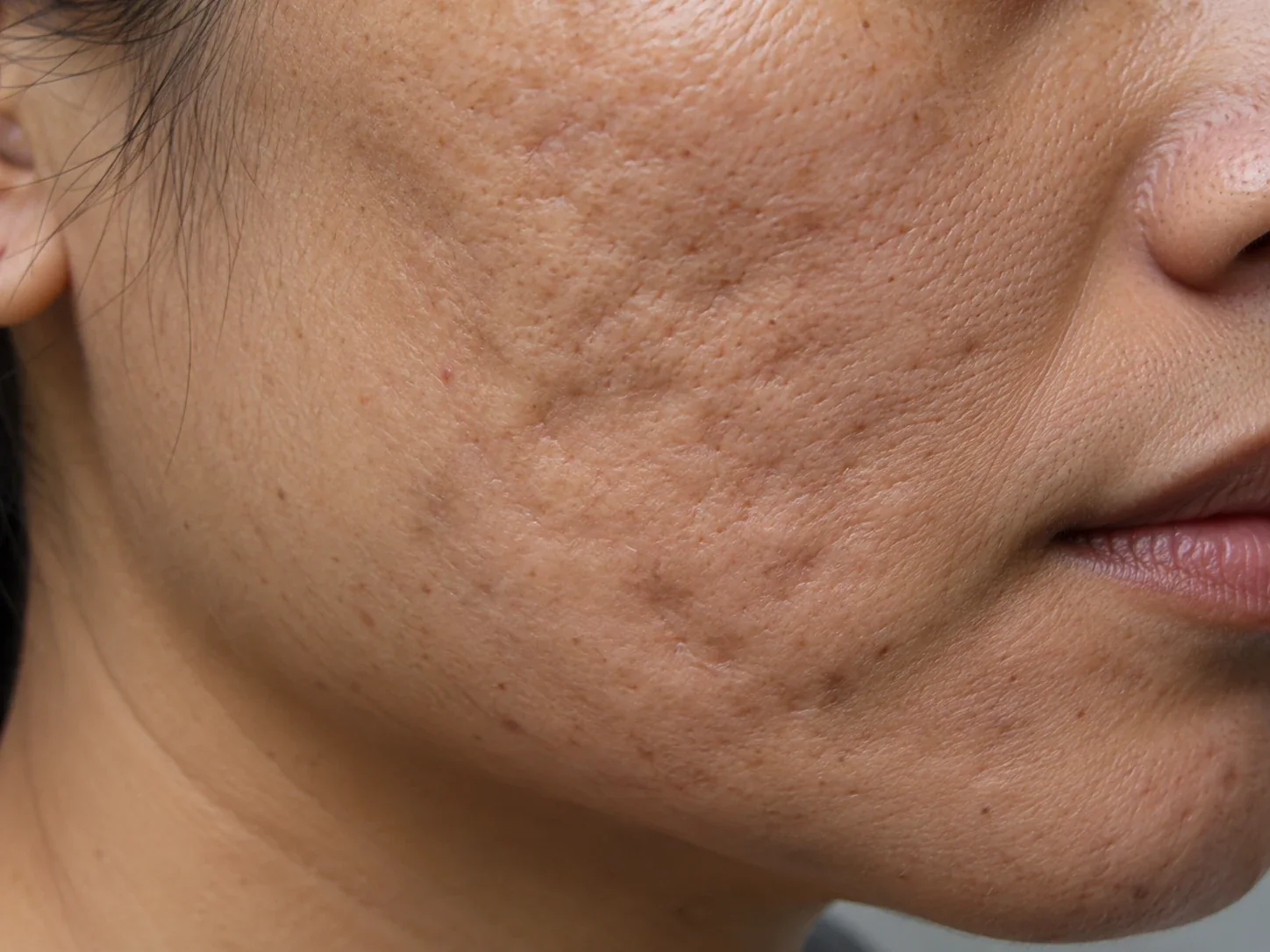
Rolling scars
Broad, sloping depressions that create an uneven, wave-like contour. When rolling scars are tethered down, subcision may be more appropriate than microneedling alone.
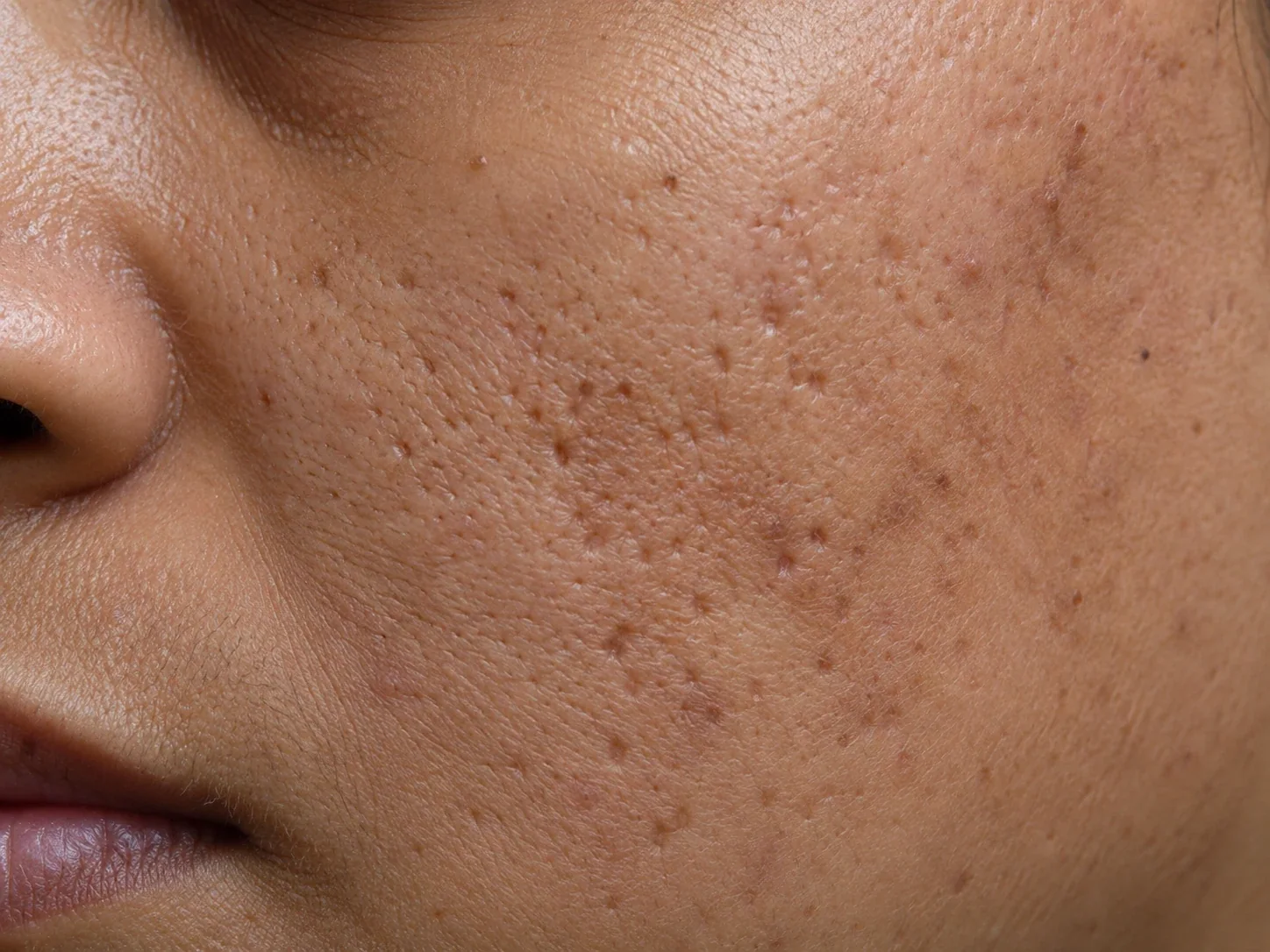
Ice-pick scars
Small, deep openings in the skin. Selected scars may be suitable for pinpoint TCA CROSS treatment.
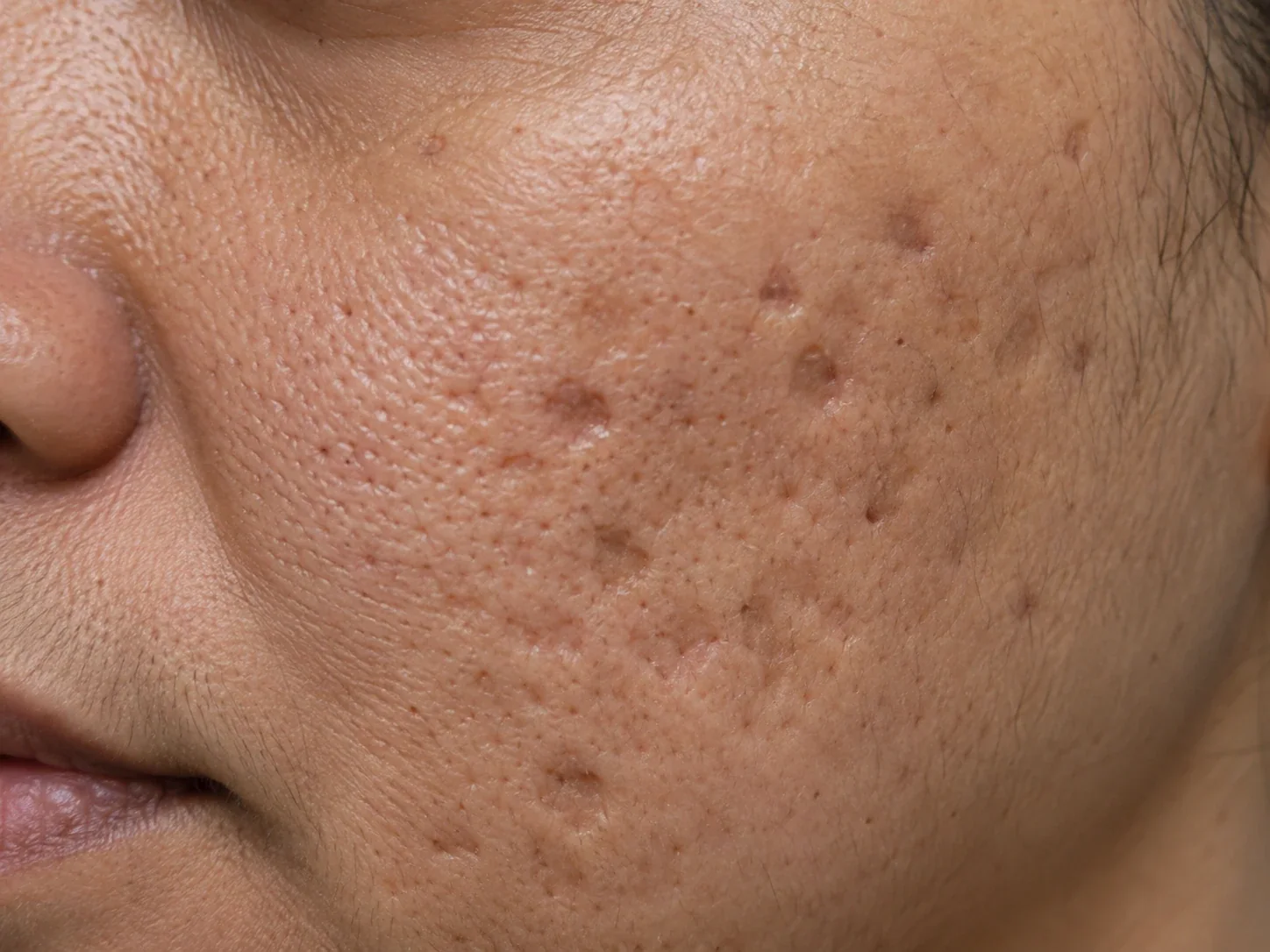
Boxcar scars
Round or oval depressions with sharper edges. Treatment varies with width, depth and surrounding texture.
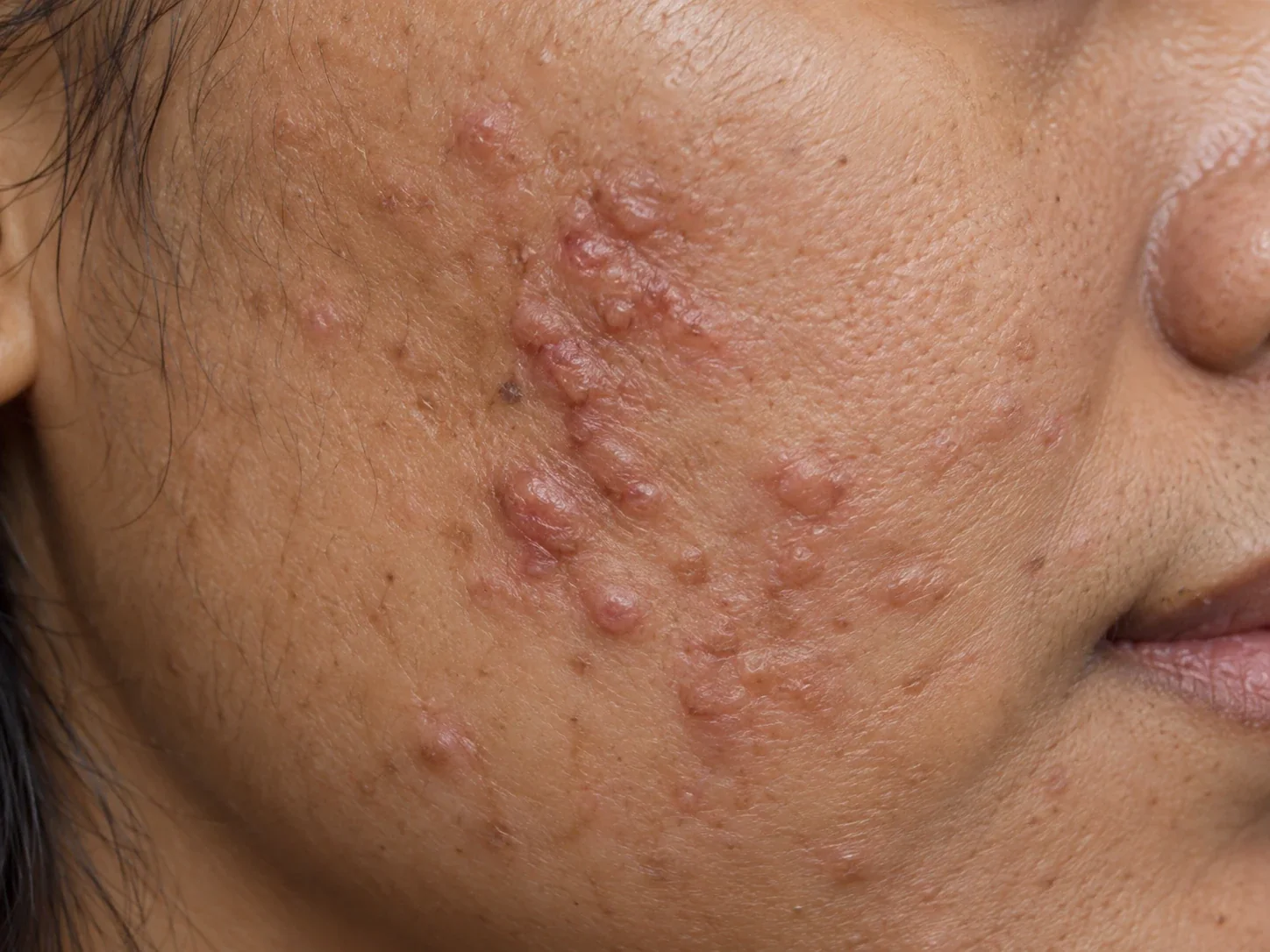
Raised scars
Firm, elevated hypertrophic or keloid-type scars. These need assessment because depressed-scar treatments may not be appropriate.
02 / WHEN TO SEEK CARE
When should you see a dermatologist?
Early assessment can help prevent additional scarring and avoid unsuitable procedures.
New scars are appearing
Uncontrolled inflammatory acne increases the risk of new permanent pits; the active acne usually needs attention first.
Pits or uneven texture bother you
True depressed scars respond differently from flat red or brown marks. Correct classification changes the plan.
You are considering a procedure
Scar depth, skin tone, pigmentation tendency and recovery time help determine whether treatment is suitable.
03 / YOUR CONSULTATION
How we decide which scar treatment fits.
An individual examination is more useful than choosing a procedure based only on online photographs.
Examine the scar pattern. Identify ice-pick, boxcar, rolling or raised scars; assess depth and distribution.
Review your skin and acne history. Check active breakouts, previous treatments, pigmentation tendency and healing history.
Discuss an appropriate plan. Explain which available procedure may help, possible side effects, recovery and gradual results.
Before treatment: what we check
These details help choose or postpone a procedure safely. Please mention them during consultation.
Active acne or infectionNew inflammatory breakouts, cold sores, or infection near the proposed treatment site.
Skin healing and pigmentationPrior keloids, poor wound healing, unusually dark or light marks after injury, or recent tanning.
Medicines and medical historyBlood thinners, bleeding disorders, immune suppression, medicines affecting healing, and recent scar treatments.
Pregnancy and personal circumstancesPregnancy or breastfeeding, allergies, recovery time available, and realistic treatment goals.
04 / PROCEDURES AVAILABLE AT OUR CLINIC
Five focused procedures. Chosen for your scar pattern.
Dr Neeraj Garg offers the following acne-scar procedures. Not every method is suitable for every scar, and more than one session may be needed.
QUICK TREATMENT GUIDE
Which of our procedures may suit your scar?
Scar depth, tethering and skin response matter. This guide is educational, not a treatment prescription.
Rolling or tethered scars
Subcision may release deeper attachments. Dermapen or dermaroller microneedling may be considered for accompanying surface texture.
Subcision is not routinely needed for all rolling scars.Ice-pick and narrow deep scars
Precisely applied 100% TCA CROSS may help selected narrow scars; it is not a full-face peel.
Deep pits usually respond less well to microneedling alone.Shallow boxcar scars and texture
Dermapen or dermaroller microneedling, sometimes with PRP, may be options. Selected narrow deep boxcar scars may be considered for TCA CROSS.
Raised scars require different assessment, not routine treatment with these methods.Mixed acne-scar patterns are common. A combination or sequence of the available procedures may be considered only after examination; results cannot be guaranteed.
01PINPOINT SCAR TREATMENT
100% TCA CROSS
Best considered for selected ice-pick and narrow, deep boxcar scars.
A dermatologist applies highly concentrated trichloroacetic acid precisely into individual scars to encourage controlled remodelling. This is not a full-face 100% TCA peel.
What to expectSmall crusts, redness and gradual improvement across sessions. Pigment changes, burns or scar worsening are possible, making careful selection and aftercare essential.
02COLLAGEN INDUCTION
Dermaroller Microneedling
Considered for selected shallow atrophic scars and uneven skin texture.
A roller device creates controlled micro-injuries in the treatment area, encouraging skin remodelling over time. It cannot reliably release deeply tethered scars.
What to expectTemporary redness and sensitivity are common; repeated sessions may be advised based on scar severity and skin response.
03ADJUSTABLE PEN TECHNIQUE
Dermapen Microneedling
An option for selected depressed acne scars and texture irregularities.
A motorised microneedling pen allows controlled, targeted treatment. The treatment depth and areas are planned after examining scar type and skin tolerance.
What to expectShort-term redness, mild swelling or pinpoint bleeding may occur. Collagen-related improvement develops gradually.
04COMBINATION OPTION
Microneedling with PRP
An additional option for suitable atrophic acne scars.
Platelet-rich plasma (PRP) is prepared from a sample of your blood and used alongside microneedling. It may offer added benefit in selected patients, although research findings vary.
What to expectMultiple sessions may be required. PRP does not guarantee better results for everyone and is not necessary for every scar.
05SCAR RELEASE TECHNIQUE
Subcision for Acne Scars
Considered for selected rolling and tethered atrophic scars that are pulled down by underlying fibrous bands.
Following local anaesthesia, the dermatologist uses a sterile needle or cannula beneath the skin to release these attachments. It is not typically the first choice for ice-pick or raised scars.
What to expectBruising, swelling and tenderness may occur for several days. Bleeding, infection, temporary lumps, pigment changes or uneven results are possible. Improvement varies, and additional sessions or complementary treatment may be considered.
Important: scar type determines suitability
Some tethered rolling scars may be suitable for subcision, while raised scars usually need a different treatment approach. Every procedure has limitations; the aim is safe, realistic improvement rather than promising complete scar removal.
Flat acne marks are not the same as pitted scars
Brown or red patches are usually post-inflammatory colour changes. True scars alter skin contour. A treatment aimed at fading marks should not be assumed to repair a deep depression.
Your acne scar treatment journey
Improvement is gradual and depends on the procedure and the scar. These are stages, not fixed appointments or promises of results.
01Assessment
Classify scar type, check active acne, discuss suitability and choose a plan.
02Procedure
One or more suitable procedures are selected; some scar patterns need staged care.
03Healing
Redness, small crusts or bruising may appear depending on the procedure and settle over time.
04Reassessment
Review recovery and gradual remodelling over weeks to months; further sessions may be advised.
Why are treatment sessions spaced apart?
Skin needs time to heal and remodel collagen. The schedule is individualised; repeating a procedure too soon may increase irritation and pigmentation risk.
Often reassessed after approximately 4–8 weeks, depending on crust healing, pigmentation and scar response.
Sessions are often separated by about 4–6 weeks or longer so the skin can recover and remodelling can be assessed.
Repeat treatment, if needed, is decided only after swelling and bruising settle and the tethered scars are reassessed; the interval is individualised.
These are general educational intervals, not a promised number of sessions or a treatment schedule for any individual patient.
05 / PRACTICAL AFTERCARE
Skin care matters before and after treatment.
Follow your dermatologist's specific advice, because aftercare differs between TCA CROSS, subcision and microneedling.
What might recovery look like?
Typical visible changes after a procedure differ. These are approximate ranges, not guaranteed healing times.
Small dark crusts can remain visible for roughly a week, sometimes longer; redness or pigmentation changes can persist beyond crust healing.
Essential aftercare
Do not pick crusts, scrub or apply unprescribed acids. Follow your dermatologist’s advice on gentle cleansing, moisturising and sun protection.
Redness, warmth, sensitivity and mild swelling are common. More intensive treatment may take longer to settle.
Essential aftercare
Avoid irritating skincare, picking and unnecessary sun exposure while the skin barrier recovers. Follow the specific post-treatment skin-care plan.
Bruising, swelling and tenderness may be noticeable for several days to around two weeks, occasionally longer.
Essential aftercare
Follow instructions about wound care, pressure, activities and medicines. Do not massage or manipulate treated areas unless advised.
These ranges describe visible early recovery—not the time needed for scars to improve. Skin tone, technique, treatment intensity and individual healing affect downtime.
Contact your dermatologist promptly if pain or swelling is worsening rather than improving, or you develop spreading redness, pus, fever, significant bleeding or unusual skin colour changes. Personal instructions from your treating dermatologist take priority.
06 / COMMON PATIENT QUESTIONS
Acne scar treatment, explained clearly.
Answers to questions patients commonly ask before scar procedures.
Can acne scars disappear completely?
Many scars can become less noticeable, but complete or guaranteed removal is not realistic. The response depends on scar type, depth and skin healing.
What is 100% TCA CROSS used for?
It is a carefully targeted procedure for selected narrow, deep scars, especially ice-pick scars. The concentrated acid is placed inside individual scars—not used as a full-face peel.
What is the difference between Dermaroller and Dermapen?
Both use microneedling to stimulate skin remodelling. A dermaroller is a rolling device; a Dermapen is a motorised pen that allows controlled treatment in selected areas. The better choice depends on your scar pattern.
Does microneedling with PRP give better results?
PRP may provide additional benefit for some patients, but study results are mixed and it is not essential for everyone. Your dermatologist can discuss whether it adds value in your case.
Which acne scars can subcision help?
Subcision is mainly considered for selected rolling or tethered depressed scars. It releases fibrous attachments beneath the scar. Bruising and swelling are common temporary effects, and results vary; it is not the usual treatment for ice-pick or raised scars.
How many treatment sessions will I need?
Many patients need more than one session rather than a single treatment. The number and spacing depend on scar severity, procedure choice, healing and response.
What downtime should I expect?
Microneedling can cause short-term redness or swelling; TCA CROSS may form small crusts; subcision can cause bruising, swelling and tenderness. Recovery and pigmentation risks vary, so follow the advice you are given.
Should active acne be treated before scar procedures?
Usually yes. Controlling ongoing inflammatory acne helps prevent new scars and makes it easier to plan treatment for existing scars.
Are dark spots left by pimples permanent scars?
Flat brown or red marks often represent post-inflammatory pigmentation or redness rather than permanent structural scars. These need a different assessment from pitted acne scars.
Is acne scar treatment painful? Will I need anaesthesia?
Discomfort varies by treatment and by the area being treated. Dermaroller and Dermapen microneedling are commonly performed after topical numbing when suitable; TCA CROSS can cause brief stinging, and subcision is generally performed with local anaesthesia. Redness, tenderness or soreness afterward may occur. Your dermatologist will explain comfort measures and recovery for the chosen procedure.
Ready for a clearer treatment plan?
Consult Dr Neeraj Garg • MBBS (IMS-BHU), MD (IMS-BHU). Maheshwari Hospital, Dalanwala, Dehradun. Consultation fee ₹800.
EXPLORE RELATED PROBLEMS