Scaly patches
Patchy scaling with itching and occasional redness.
Tinea capitis is a dermatophyte fungal infection of scalp hair and surrounding skin. It is more common in children but can also affect adults. Unlike ordinary dandruff, scalp ringworm can cause patchy hair loss, broken hairs, swollen nodes or a painful inflammatory swelling called a kerion.
Consultation ₹800 · Pre-booking required · No advance booking payment
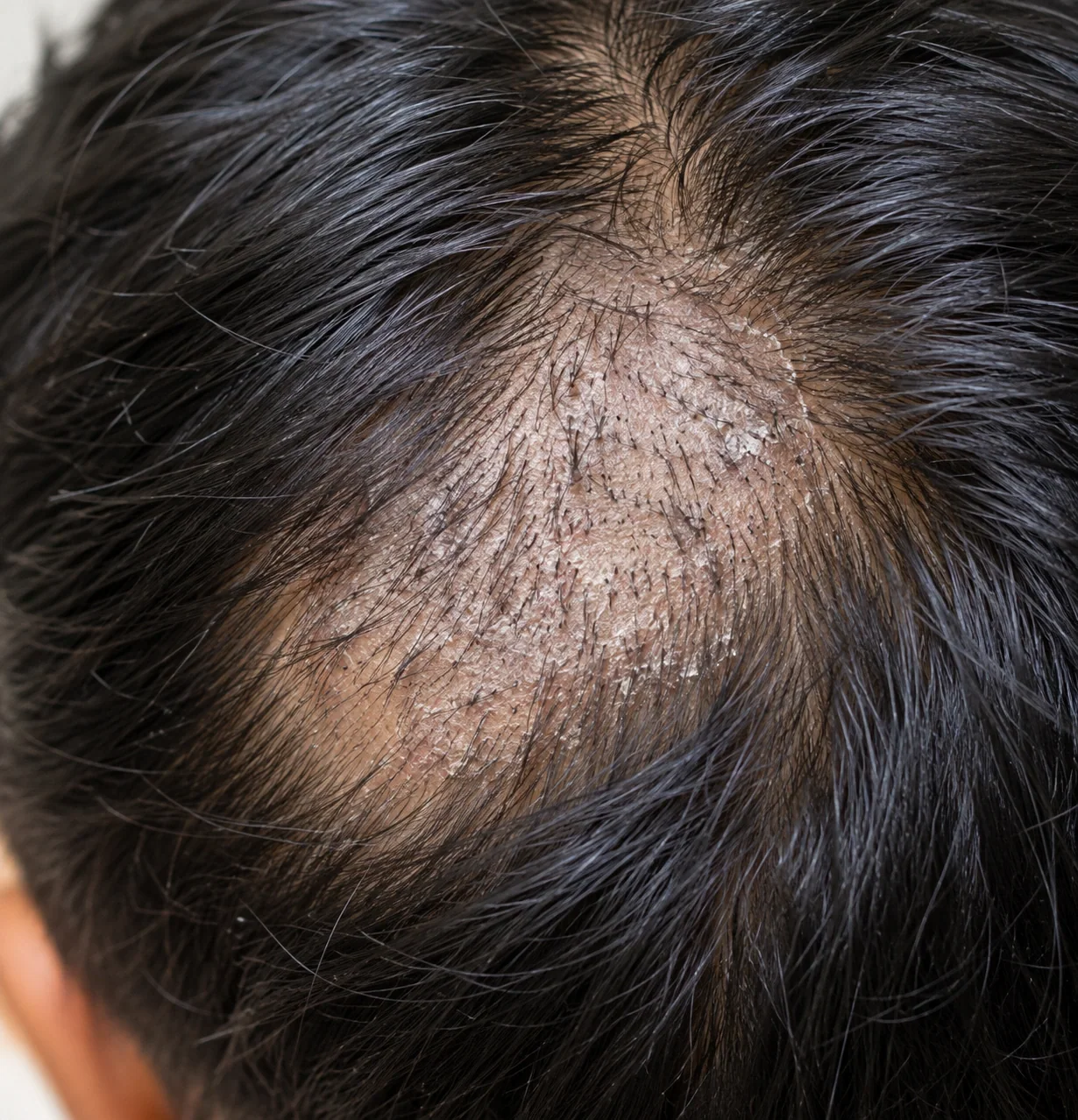
These clues help distinguish one kind of hair loss from another—but images and symptoms alone cannot confirm a diagnosis.
Patchy scaling with itching and occasional redness.
Short snapped-off hairs or black dots at scalp level.
Affected areas may look thinner or bald.
A tender boggy inflammatory plaque may threaten scarring.
Tinea capitis involves infection of the hair shaft and follicle by dermatophyte fungi. Because the organisms enter hairs, topical shampoos or creams alone usually cannot cure it. It may spread through close contact, shared combs, hats or contaminated household items.
Several non-fungal conditions can resemble scalp ringworm, including seborrhoeic dermatitis, psoriasis, bacterial folliculitis and alopecia areata. Thick inflammation and pustules raise concern for kerion, where delay can contribute to permanent scarring.
A scalp examination is the starting point. Trichoscopy and fungal testing of affected hairs or scales may help confirm the diagnosis; not every patient needs every test.
Inspect for scale, broken hairs, patchy loss, pustules and enlarged regional lymph nodes.
KOH microscopy of plucked hairs/scale and fungal culture or PCR where available can help confirm infection and guide choice of treatment.
A boggy tender kerion or rapidly worsening scalp lesion needs prompt treatment and assessment for secondary infection.
Management depends on the actual condition, its severity, age, medical history and your goals. Procedures are not a replacement for treating the underlying cause.
Tinea capitis usually requires a doctor-prescribed oral antifungal such as griseofulvin or terbinafine; choice and duration depend on the organism, age, weight and clinical context.
Ketoconazole or selenium-sulfide shampoo may reduce surface fungal shedding and transmission but does not replace oral treatment.
Avoid sharing combs, hairbrushes, hats or towels, and clean hair-care items regularly. Symptomatic family members and possible animal sources of reinfection may need assessment; practical prevention steps are outlined below.
Do not use steroid-containing combination creams on an undiagnosed scaly scalp; they can mask or worsen fungal infection. PRP/GFC and routine hair-growth supplements do not treat tinea capitis.
Scalp ringworm is contagious, but simple steps can reduce spread while your child completes the prescribed treatment.
Children can usually return to school or nursery once appropriate oral antifungal treatment has started and they are well enough to attend. Inform the school and follow its local policy. A painful, draining kerion or severe illness needs individual medical advice before returning; children do not usually need to stay home until all hair has regrown.
Do not share hairbrushes, combs, hats, helmets, towels or pillowcases. Clean or replace potentially contaminated hair accessories and wash bedding regularly. Anyone at home with scalp scaling, itching or patches of hair loss should be assessed.
Complete the prescribed course even when the scalp starts improving. If infection recurs, discuss screening household contacts, including possible symptom-free carriers, with the dermatologist. A pet with patchy fur loss should be assessed by a veterinarian.
Hair grows slowly. These are broad clinical milestones, not a guaranteed timetable for recovery or response.
Check scalp and sample hairs or scale as appropriate.
Oral antifungals are usually required for several weeks and sometimes longer; complete the prescribed course.
Confirm clinical clearance and assess hair regrowth; scarring cases may not fully recover.
Clear answers without unrealistic promises or one-size-fits-all treatments.
Do not begin or discontinue prescription treatments solely from a webpage. A dermatologist can identify overlapping disorders and discuss benefits, contraindications and follow-up. All clinical images on this page are AI-generated illustrations—not photographs of patients or treatment results.
Dr Neeraj Garg · MBBS (IMS-BHU), MD (IMS-BHU)
Maheshwari Hospital, Dalanwala, Dehradun · Consultation ₹800