White strands at a young age
Scattered grey or white hairs in teenagers or young adults.
Premature greying (early canities) means grey or white hair appearing earlier than expected. Hair loses colour as pigment production in the follicle declines. Family history is common; occasionally an associated medical or nutritional issue is worth assessing. There is currently no reliably proven treatment that turns genetically grey hair permanently black.
Consultation ₹800 · Pre-booking required · No advance booking payment
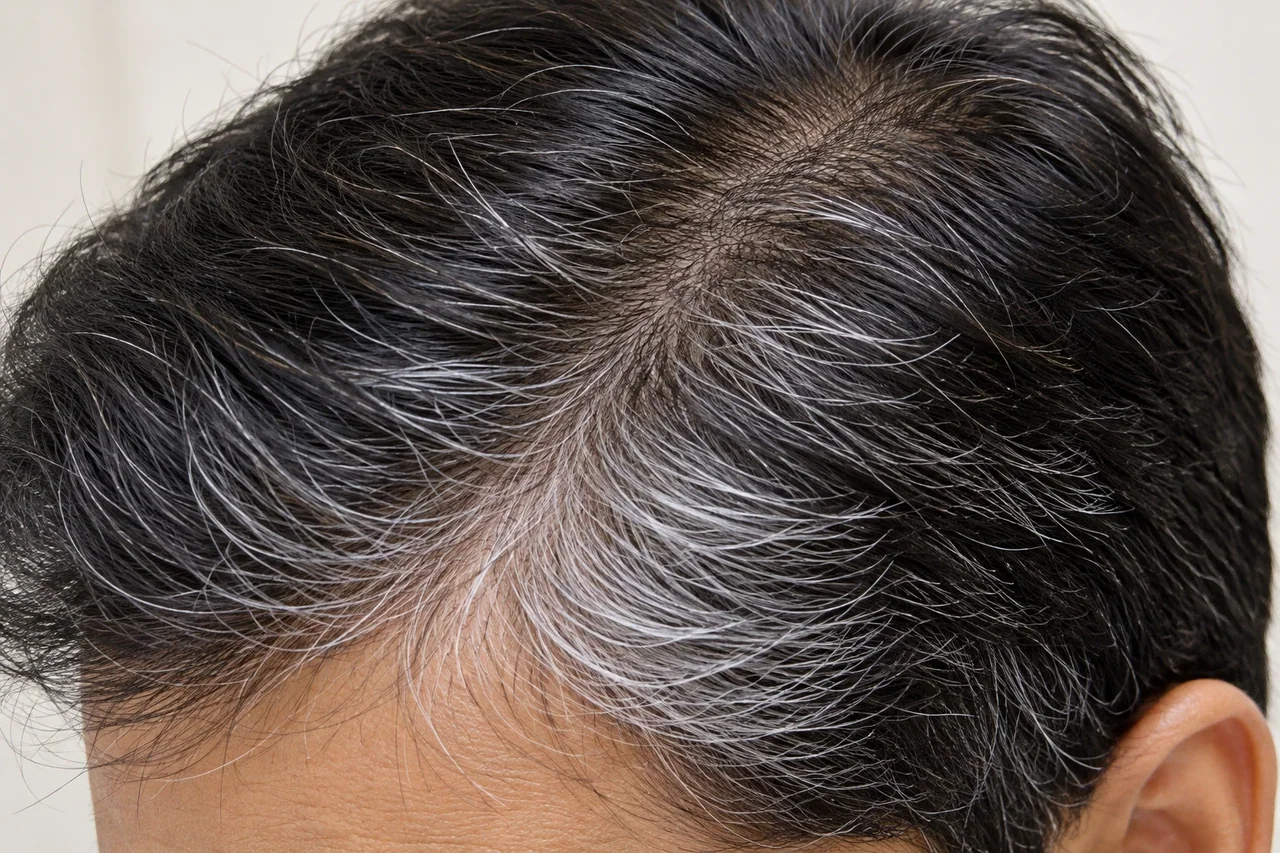
Early white hair may be more noticeable against dark hair. Age cutoffs vary across studies and ethnic populations; the pattern, family history and associated symptoms matter more than one number.
Scattered grey or white hairs in teenagers or young adults.
Grey strands may first be noticed around the temples or along the hair part.
The proportion of unpigmented hairs may increase slowly over years.
Patchy white hair, skin depigmentation, fatigue or brittle hair may prompt further assessment.
Hair colour comes from melanin made by pigment-producing cells in hair follicles. As this activity declines, newly formed hairs can appear grey or white. Genetics is often the dominant factor; greying by itself does not mean poor health.
Smoking and chronic stress have been associated with earlier greying. In selected patients, vitamin B12 deficiency, iron-related problems, thyroid disease or certain skin disorders may be relevant. These associations do not mean every person needs extensive testing or supplements.
There is no single laboratory panel required for everyone. Examination and history determine whether investigations might be useful.
Age of onset, family history, smoking, recent changes and any associated hair loss or scalp symptoms.
Check for diffuse versus localised white hairs, associated skin depigmentation and scalp disease.
CBC, vitamin B12, iron status or thyroid tests may be considered when symptoms, diet or examination indicate a possible deficiency or illness.
Management focuses on identifying any treatable underlying issue and discussing safe appearance options. Promises of permanent recolouring should be viewed cautiously.
If a nutritional deficiency or thyroid disorder is found, appropriate treatment improves overall health and may help a contributory cause. Established white strands often remain white.
A balanced diet, adequate sleep, avoiding smoking and appropriate stress management are sensible measures, although none guarantees prevention or reversal of greying.
Hair dyes, temporary root-touch-up products and natural colouring options can cover grey hair. Selection depends on scalp sensitivity and personal preferences.
There is no established PRP, GFC, vitamin cocktail, oil or medicine proven to permanently restore colour to genetically grey hair. Avoid needless investigations and treatments.
Hair dye can be an effective cosmetic choice, but some people develop allergic contact dermatitis from ingredients such as para-phenylenediamine (PPD).
Follow the product instructions and recommended allergy precautions. Stop using a dye if it causes itching, facial swelling, oozing or scalp dermatitis.
Plucked hairs generally regrow the same colour. Repeated traction can irritate follicles and potentially contribute to thinning.
Rapidly increasing greying with systemic symptoms, patchy white hair with skin depigmentation, or associated hair shedding deserves individual assessment.
The outcome depends on whether greying is inherited or linked with a treatable factor. Review is based on findings, not a fixed schedule for everyone.
Review onset, family history and any associated symptoms; decide whether testing is appropriate.
Treat an identified deficiency or other condition and review clinical progress when indicated.
Set realistic expectations: most established grey hair does not reliably regain pigment; safe camouflage may remain useful.
Clear answers without unnecessary tests or unrealistic treatment promises.
Do not begin or discontinue medicines solely on the basis of a website. An examination helps confirm the condition and select safe treatment. Images on this page are AI-generated medical illustrations, not real patients or treatment results.
Dr Neeraj Garg · MBBS (IMS-BHU), MD (IMS-BHU)
Maheshwari Hospital, Dalanwala, Dehradun · Consultation ₹800