Persistent itching
Scalp itching is common, particularly behind the ears or at the nape; it may be absent initially.
Head lice (pediculosis capitis) are tiny insects that live among scalp hairs and feed on human blood. They spread mainly through direct head-to-head contact, particularly among children. Having lice is not a sign of poor hygiene, and effective treatment depends on confirming the infestation and using the right method.
Consultation ₹800 · Pre-booking required · No advance booking payment
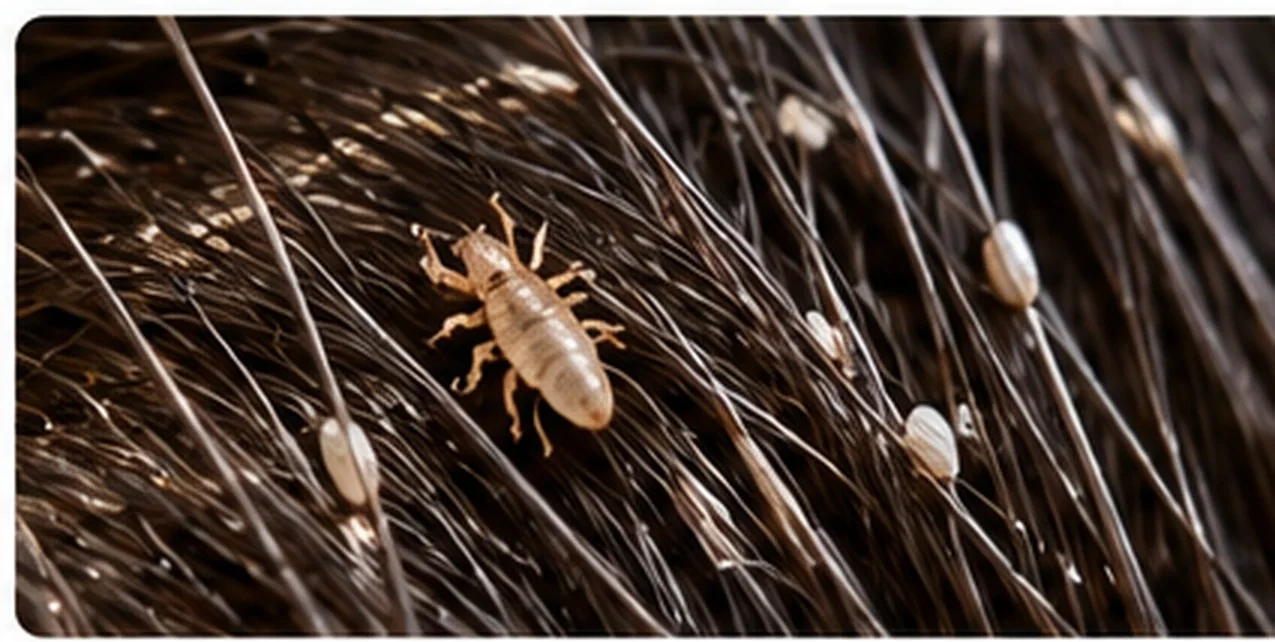
Lice can be difficult to spot because they move quickly and avoid light. Itching may take time to develop and not everyone has symptoms.
Scalp itching is common, particularly behind the ears or at the nape; it may be absent initially.
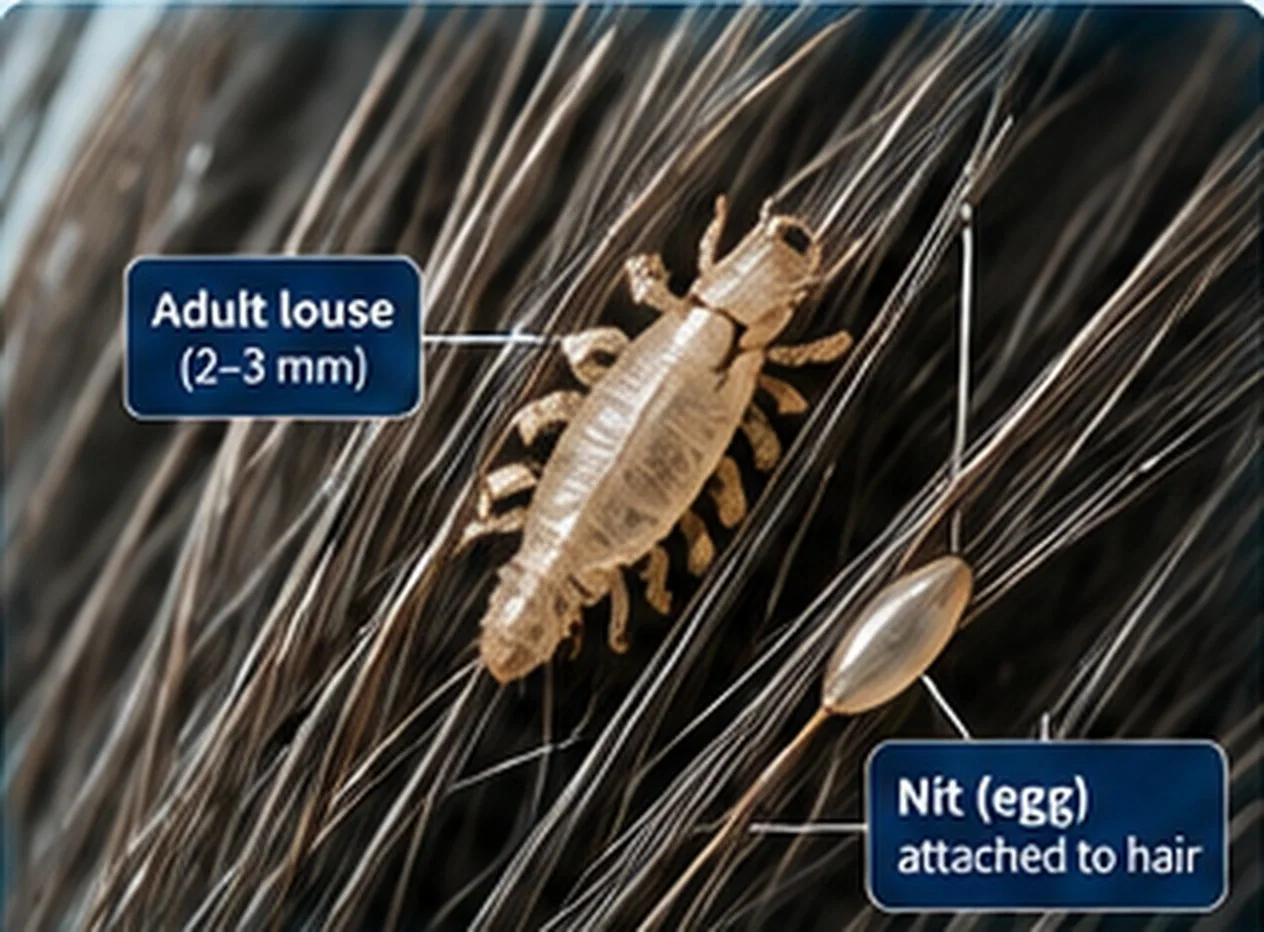
Tiny tan or greyish insects that crawl through the hair; they do not jump or fly.
Small oval eggs are firmly cemented to individual hair shafts near the scalp.
Redness and excoriations may appear; secondary bacterial infection is uncommon but possible.
Head lice most often move from one person to another through close hair-to-hair contact during play, at home or in group settings. They crawl; they do not fly or jump. Spread through shared combs, hats or hair accessories is possible but less common.
Pets do not transmit human head lice. Lice are unrelated to cleanliness or socioeconomic background, and they are not known to spread disease. Children and household members should not be blamed or embarrassed.
Because dandruff and hair-product residue are often mistaken for eggs, unnecessary repeated lice treatment is common. Confirmation matters.
Check the nape and behind the ears under bright light for moving lice and eggs close to the scalp.
Systematic combing, especially of wet hair, can help detect live lice or nymphs that are hard to see.
Dandruff, seborrhoeic dermatitis and scalp eczema can also cause itching; persistent symptoms without lice need a different diagnosis.
The approach depends on age, pregnancy or breastfeeding status, local product availability, previous treatments and whether live lice are still present.
Permethrin 1% lotion is a commonly used first-line option in suitable patients. Follow the exact age restrictions, application instructions and contact time on the prescribed or supplied product.
Permethrin may not kill all eggs. A second application is often advised around day 9 if required by the product instructions. Repeating treatment too soon or every day may irritate the scalp without helping.
A lice comb can help remove lice and nits. Check and comb the hair every 2–3 days for the following 2–3 weeks. Wet-combing can also be an option when medicines are unsuitable.
If live, active lice persist after correct treatment and appropriately timed retreatment, consider misdiagnosis, reinfestation or resistance. A dermatologist may select an alternative agent according to age and availability.
Head lice are common among schoolchildren. The aim is prompt appropriate treatment, not unnecessary absence or excessive cleaning.
Children generally do not need to leave class early and can return after beginning appropriate treatment. Remaining nits alone should not automatically prevent school attendance; follow local school policies.
Check household members and close contacts. Treat confirmed active infestations together, and assess bed-sharing contacts. Routine medication for every family member is unnecessary.
Avoid sharing combs or caps. Wash recently used bedding and clothing appropriately, clean combs in hot water and vacuum if needed. There is no need to fumigate or repeatedly spray the home.
The timing depends on which medicine is used; follow its product directions rather than repeating treatment automatically.
Confirm active lice, use the selected treatment correctly and check close contacts.
Repeat treatment only at the interval recommended for that product; many permethrin regimens use day 9.
Inspect and comb periodically; if live lice persist after proper treatment, reassess instead of repeated unsupervised dosing.
Clear answers without unnecessary tests or unrealistic treatment promises.
Do not begin or discontinue medicines solely on the basis of a website. An examination helps confirm the condition and select safe treatment. Images on this page are AI-generated medical illustrations, not real patients or treatment results.
Dr Neeraj Garg · MBBS (IMS-BHU), MD (IMS-BHU)
Maheshwari Hospital, Dalanwala, Dehradun · Consultation ₹800